What Is Microdontia?
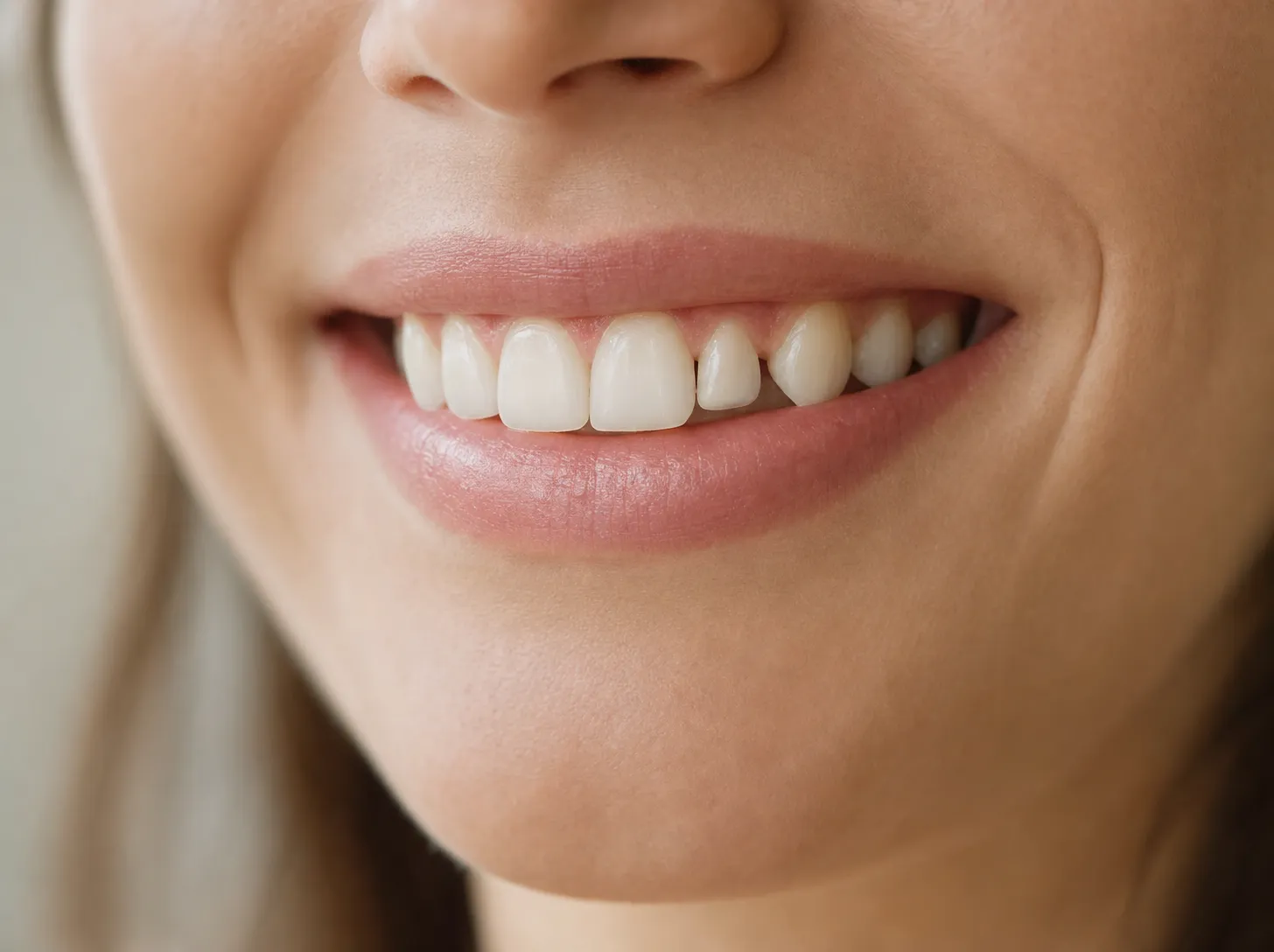
Microdontia means a tooth (or teeth) developed smaller than the normal range for that tooth type. Dentists also just call these microdontia teeth. It’s a developmental condition, not something that happens later in life. The tooth was small from the time it formed.
There are two forms, and they’re not equally common.
Localized Microdontia (Common)
This is by far the more frequent version. One or two specific teeth are small while the rest of the mouth is normal size. The classic example is the upper lateral incisor, the tooth just to the side of your two front teeth. When it’s undersized and cone-shaped, dentists call it a peg lateral. Peg laterals show up in roughly 1-2% of the population and often run in families. We cover peg laterals in detail, including what causes them and before-and-after results, in our guide to peg lateral incisors.
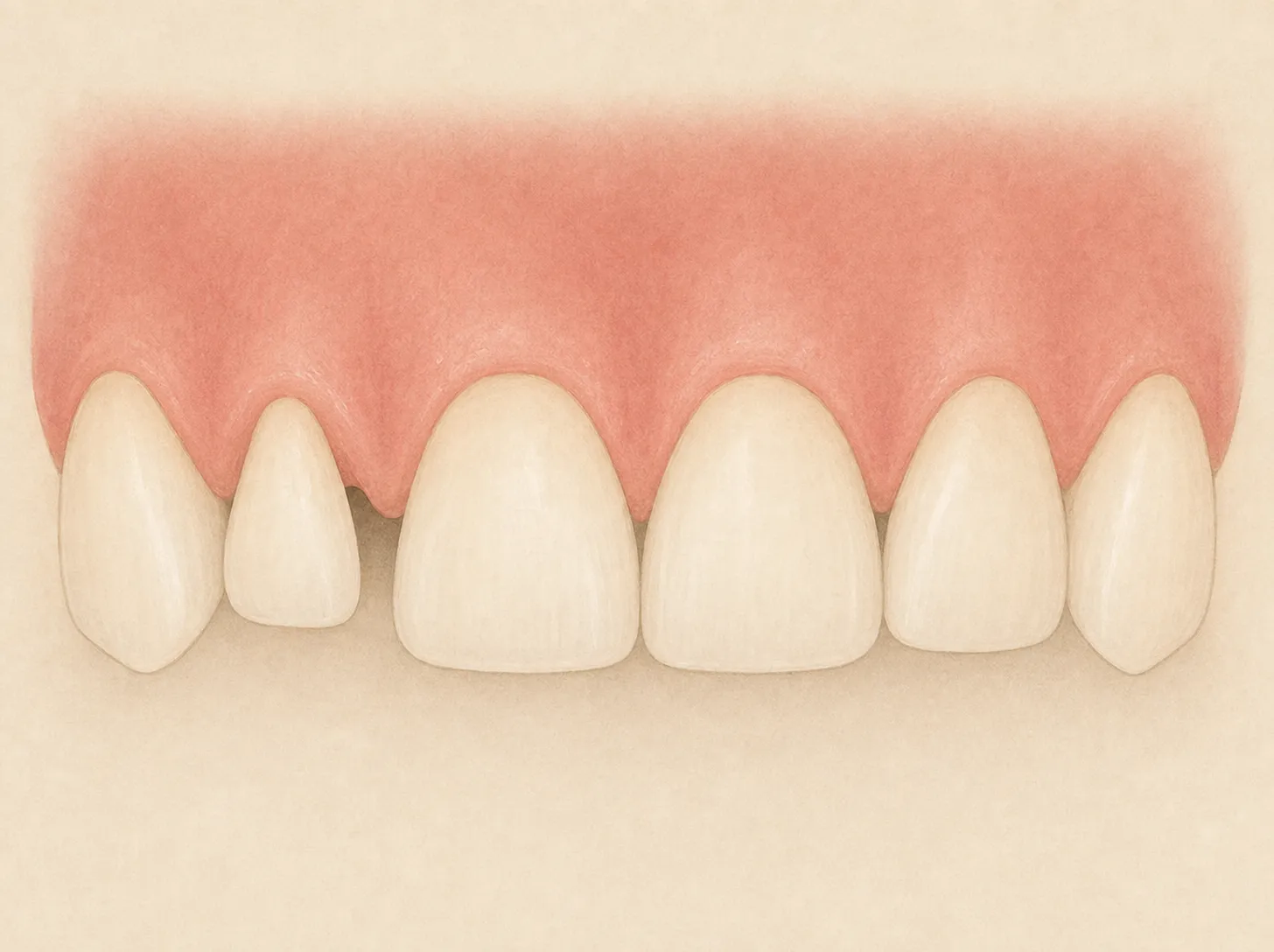
Generalized Microdontia (Rare)
Every tooth in the mouth is smaller than average. This is uncommon and usually connected to a genetic syndrome or a medical condition that affected tooth development, such as ectodermal dysplasia, Down syndrome, or pituitary dwarfism. If you have generalized microdontia, it was very likely identified in childhood alongside other symptoms, not discovered as an adult wondering about your smile.
If you’re an adult asking “why are my teeth so small” and it’s just one or two teeth, you’re almost certainly looking at localized microdontia, not the generalized form.
What Causes Microdontia?
Genetics is the main driver. Peg laterals and other localized small teeth tend to cluster in families, the same way tooth shape and jaw size do. Beyond genetics, a few other factors are linked to microdontia:
- Radiation or chemotherapy during childhood, while permanent teeth were still forming
- Certain genetic syndromes affecting the whole body, not just the teeth
- Hormonal conditions that affect growth, including pituitary issues
For the vast majority of adults with one small lateral incisor, there’s no underlying condition to worry about. It’s a cosmetic trait, not a health issue.
Big Gums, Small Teeth: Is It Really Microdontia?
This is one of the most common reasons people think they have small teeth when they don’t. If your gums sit lower on your teeth than average, less of each tooth is visible above the gumline. The tooth itself is a normal size. It just looks short because more of it is covered.
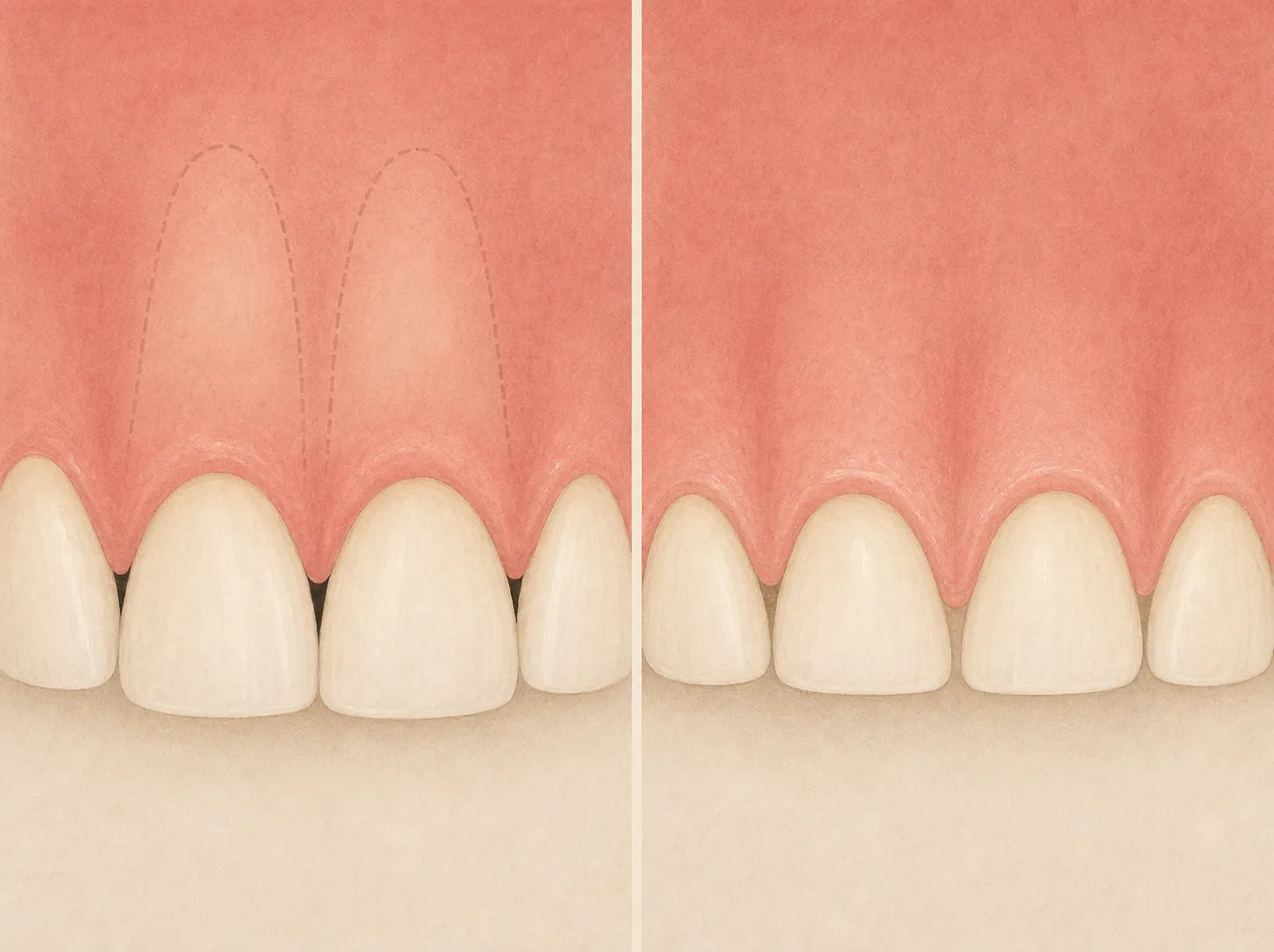
Dentists call this altered passive eruption, or more simply, excess gum tissue that never receded to expose the full tooth crown. It’s especially common on the upper front teeth and often shows up as a “gummy smile.”
The distinction matters because the fix is completely different. True microdontia is treated by adding material to the tooth. A gummy smile is treated by removing excess gum tissue to reveal the tooth that’s already there, a procedure called gum recontouring or crown lengthening. Many patients need only the gum procedure and nothing done to the teeth at all.
Telling the two apart takes an exam that measures how much healthy tooth structure is hiding under the gum. Sometimes the answer is gum recontouring alone. Sometimes it’s a combination of gum recontouring and bonding to build up a genuinely small tooth underneath.
Other Reasons Teeth Look Small (Without True Microdontia)
Beyond gum coverage, a few other things create the appearance of small teeth without any tooth actually being undersized:
Wear. Years of grinding, clenching, or acid erosion shorten teeth gradually. The tooth started at a normal size and wore down. This is worth ruling out with an exam, especially if you also deal with jaw soreness or headaches, since grinding is often the underlying cause.
Smile proportions. Teeth that are a normal size can still look small next to wide gaps, a narrow smile arch, or teeth that are spaced further apart than average. The tooth measurement is normal. The overall composition just draws the eye toward gaps rather than tooth surface.
Comparison to Instagram and orthodontic marketing. A lot of what gets labeled “small teeth” online is really just natural variation in tooth width and smile shape. Not every mouth is built for a wide, uniform smile, and that’s not a problem to fix.
Small Gaps From Small Teeth
When a tooth (or several) is smaller than the teeth around it, the jaw often has more space than the teeth fill. That space shows up as a gap between teeth, most often near the peg lateral itself or between the front two teeth. This is a common pattern: someone comes in about “a small gap in my front teeth” and the underlying cause turns out to be one undersized tooth next to it.
These gaps can also leave small dark triangles at the gumline once the teeth are built up or straightened, similar to what we cover in our guide on black triangles between teeth. If you’ve had small teeth built up or aligned and now notice gumline triangles, that’s a separate but related fix, usually handled with the same bonding appointment.
Are Small Teeth Ever a Functional Problem?
For most patients, no. Small teeth and peg laterals are a cosmetic concern, not a health one. They bite and chew fine.
The exception is when a small tooth leaves enough extra space that neighboring teeth drift, tip, or rotate to fill the gap over time. That drifting can eventually affect your bite. If you have a peg lateral or other small tooth and you’re noticing your bite feel different than it used to, or you see other teeth shifting, that’s worth an exam sooner rather than later. Left alone long enough, drifting can turn a simple cosmetic case into one that needs orthodontics first.
Treatment Options for Small Teeth
Composite Bonding
For a single small tooth or a peg lateral, composite bonding is usually the first option on the table. The dentist applies tooth-colored composite resin directly to the tooth and shapes it to match the size and contour of the teeth next to it. No enamel removal, one visit, and the color is matched to your existing teeth.
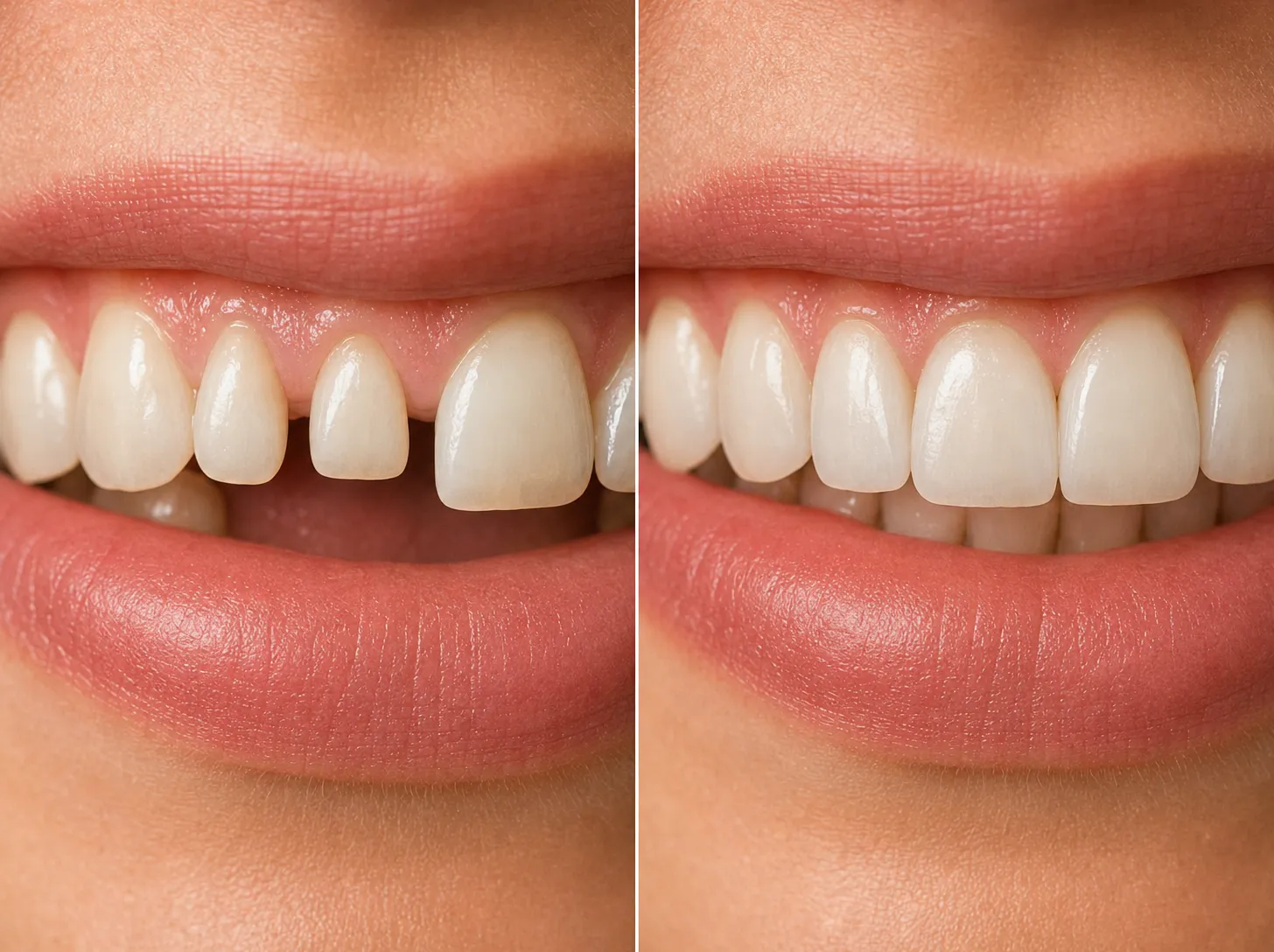
Representative image, not an actual patient photo.
Cost: $240-$475 per tooth, depending on how much shape needs to be added and how many surfaces are involved. Our dental bonding cost guide breaks down the pricing in more detail.
Bonding holds up well for smaller builds but picks up stain over time and isn’t as durable as porcelain. It’s the right call for most single-tooth cases, especially when budget matters or you want to see the result before committing to anything permanent.
Composite Veneers
When a tooth needs more coverage across the whole front surface, not just added width at one edge, a composite veneer gives a fuller rebuild while staying in the same material family as bonding.
Cost: $660-$1,015 per tooth.
Porcelain Veneers
For patients who want a permanent, stain-resistant result, or who are addressing small teeth alongside other cosmetic goals like color or overall shape, porcelain veneers are the longer-term option. A custom-made porcelain shell covers the front of the tooth and can be built to whatever width and length matches your smile.
Cost: $1,800+ per tooth. Veneers require removing a thin layer of enamel and take two to three visits, so they’re a bigger commitment than bonding. For a single peg lateral, that’s often more than the case needs. For multiple small teeth or a broader smile makeover, veneers can solve it all in one plan.
Gum Recontouring (for Gummy Smiles)
If your case is really a gum-coverage issue rather than true microdontia, gum recontouring exposes more of the natural tooth crown by removing excess gum tissue. There’s no set published price for it. Cost depends on how many teeth are involved and whether any bone reshaping is needed alongside the gum work, so it gets quoted at the consultation.
Orthodontics (Invisalign)
When a small tooth has left a gap that bonding alone can’t close comfortably, or when several teeth need repositioning before any cosmetic work, Invisalign can close the space first. Bonding or veneers then finish the job on the tooth itself. This combination comes up often with peg laterals, since aligning the teeth first sometimes reduces how much bonding material is needed.
Treatment Comparison
| Treatment | Visits | Best for |
|---|---|---|
| Composite bonding | 1 | Single small tooth or peg lateral |
| Composite veneer | 1-2 | Fuller rebuild of one or two teeth |
| Porcelain veneers | 2-3 | Multiple teeth or a broader smile plan |
| Gum recontouring | 1 | Gummy smile, teeth that only look small |
| Invisalign | Months | Gaps from small teeth, before bonding or veneers |
Braces on Small Teeth
Small teeth and orthodontics come up together more than people expect. Braces or Invisalign move teeth into better position, but they don’t change tooth size. If a peg lateral or other small tooth leaves a gap after orthodontic treatment, that gap is usually closed with bonding once the braces come off, not with the orthodontics itself.
The order matters. Aligning the teeth first, then bonding or veneering the small tooth, usually gives a better final result than bonding around teeth that are still crowded or gapped in ways that will shift later.
Small Teeth in Adults vs. Kids
Peg laterals and other small teeth are usually noticed first when the permanent teeth come in, around age 8-10. Many parents wait until all the permanent teeth are in and any orthodontic treatment is finished before doing cosmetic work, since a tooth’s final position can shift during growth.
Adults with small teeth they’ve lived with for years often come in because they’re finally ready to address something they’ve noticed since their teens. There’s no downside to treating it as an adult. Bonding, veneers, and gum recontouring all work the same way regardless of age, as long as the teeth around the small tooth have finished shifting.
How Much Does It Cost to Fix Small Teeth in Nashville?
For a single peg lateral or small tooth, bonding runs $240-$475 depending on the amount of shaping involved, and it’s done in one visit. That’s the most common and most affordable fix for this exact concern.
If you’re addressing multiple teeth or want a longer-lasting, stain-resistant result, porcelain veneers start at $1,800 per tooth. Composite veneers sit in between at $660-$1,015 per tooth for a fuller rebuild than bonding but less than the cost of porcelain.
If your case is a gummy smile rather than true microdontia, gum recontouring may be the only procedure you need. Its cost depends on how many teeth are involved and whether any bone reshaping is needed, so it gets quoted after the exam rather than from a price list.
Does Insurance Cover Small Teeth Treatment?
Usually not, since bonding and veneers for a small tooth are typically classified as cosmetic. A few exceptions:
- If the small tooth is part of a broader bite or functional issue, part of the treatment may be covered
- HSA and FSA funds can be used for bonding, veneers, or gum recontouring
- Gum recontouring tied to periodontal disease, rather than cosmetic reshaping, may have separate coverage
Financing Options
- Sunbit: Most patients get approved in minutes, with 0% APR for qualified applicants.
- HSA/FSA: Pre-tax dollars reduce your effective cost by 20-30%.
- In-house payment plans: Available for larger cases like full veneer sets.
FAQs About Small Teeth and Microdontia
Why are my teeth so small?
Usually one of four things: true microdontia (a tooth developed smaller than normal, most often a peg-shaped upper lateral incisor), a gummy smile that covers more of your teeth than average, wear from grinding or acid erosion, or smile proportions that make normal-sized teeth look small next to gaps or spacing. An exam tells you which one applies.
What is microdontia?
Microdontia is a developmental condition where a tooth is smaller than the normal size range. Localized microdontia affects one or two teeth, most commonly the upper lateral incisors, and is fairly common. Generalized microdontia affects every tooth and is rare, usually linked to a genetic condition identified in childhood.
Is having small teeth genetic?
Often, yes. Peg laterals and other small teeth tend to run in families, similar to tooth shape and jaw size. Most adults with one small tooth have no underlying medical condition.
Can braces fix small teeth?
Braces and Invisalign reposition teeth but don’t change their size. They can close gaps caused by a small tooth or set up better spacing before bonding or veneers finish the job, but the tooth itself still needs bonding, a veneer, or another restorative fix to look proportional.
Why do I have big gums and small teeth?
This is usually excess gum tissue covering more of the tooth crown than average, not a smaller tooth underneath. It’s called altered passive eruption. Gum recontouring removes the excess tissue and reveals the natural tooth size that was there all along.
How much does it cost to fix small teeth?
Bonding for a single tooth runs $240-$475. Composite veneers run $660-$1,015 per tooth. Porcelain veneers start at $1,800 per tooth. Gum recontouring cost depends on how many teeth are involved and is quoted after an exam.
Can adults get small teeth fixed, or is it too late?
There’s no age limit. Bonding, veneers, and gum recontouring all work the same way in adults as they do in younger patients, as long as any orthodontic movement is finished first.
Do small teeth need to be fixed at all?
Not unless you want them to look different, or a gap from a small tooth is causing neighboring teeth to drift. Small teeth on their own don’t affect chewing or oral health for most patients.
Next Steps
A consultation with Dr. D’Aoust at our West Nashville office covers the exam, a measurement of how much tooth is under the gum, which of the four causes applies to you, and a specific quote before any work starts.
Book your first visit online or call (615) 933-5800. You can also contact us with questions first.