How Much Do Porcelain Veneers Cost in Nashville?
Porcelain veneers cost $1,800 or more per tooth. Most patients veneer the teeth that show when they smile, usually 6 to 8 of them, so a full front-smile makeover starts around $11,000 and climbs with the number of teeth and the complexity of the design.
Composite veneers are shaped by hand from the same resin used for bonding and cost less, at $660 to $1,015 per tooth. They don’t last as long, but they’re a real option when budget is the deciding factor.
Here’s the Nashville veneer cost breakdown by type:
| Veneer Type | Cost Per Tooth | Lifespan | Visits |
|---|---|---|---|
| Composite veneer (hand-shaped resin, one appointment) | $660 - $1,015 | 5 - 7 years | 1 - 2 |
| Porcelain veneer (custom lab-made ceramic) | $1,800+ | 10 - 15+ years | 2 - 3 |
| Full upper smile, 6 - 8 porcelain veneers | $11,000+ | 10 - 15+ years | 2 - 3 |
How many teeth a smile actually needs comes out of the consultation. Some patients fix one chipped front tooth. Others redesign the whole smile line for even color and shape.
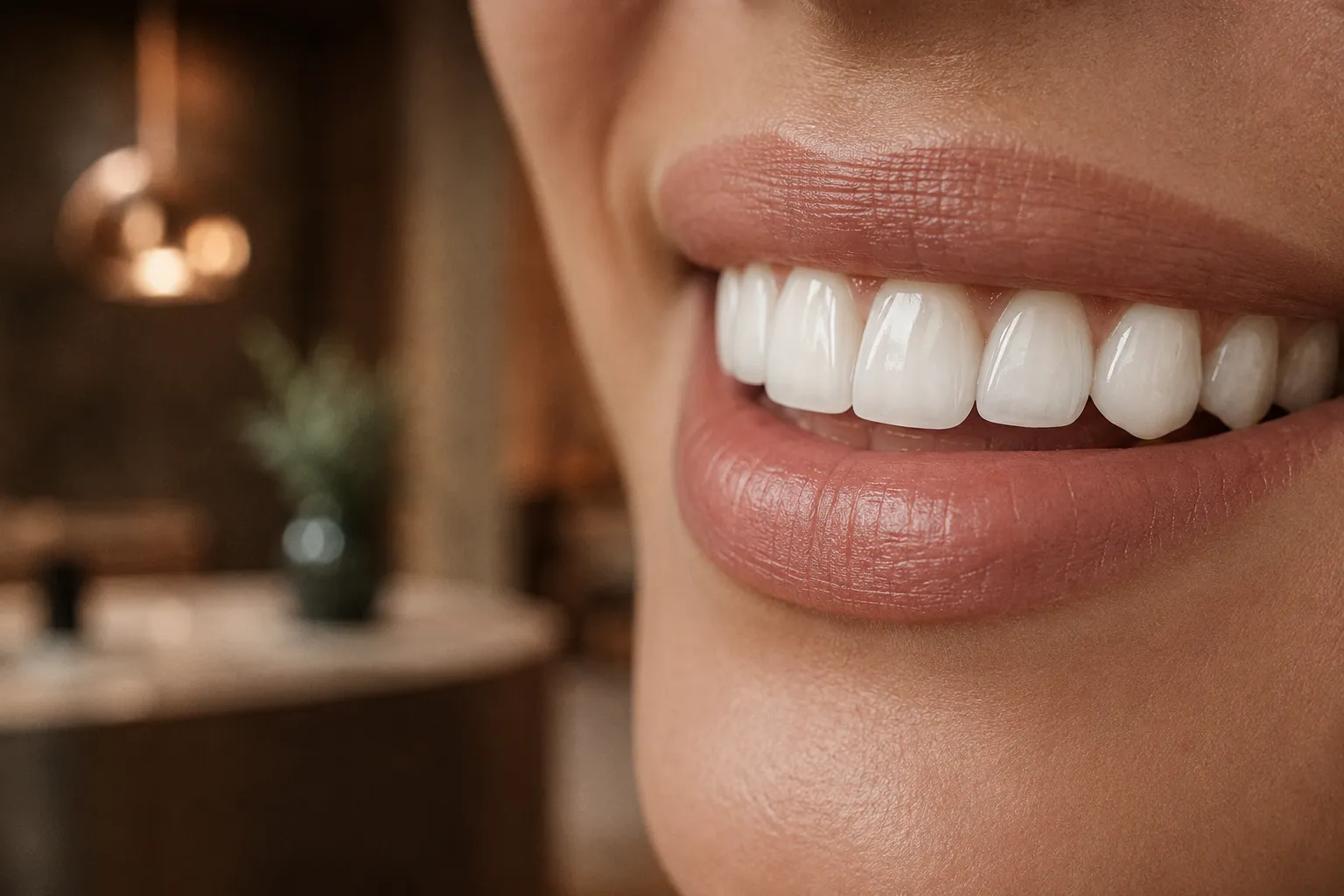
Composite vs. Porcelain Veneers
Both are called veneers, and both cover the front of a tooth. The material is the difference, and it changes cost and longevity.
Composite veneers are built right in the mouth. A dentist layers tooth-colored resin onto the front of the tooth, shapes it by hand, and cures it with a light. One visit, no lab, lower cost. The trade-off is that composite picks up stain faster and wears sooner, so plan on 5 to 7 years before a refresh.
Porcelain veneers are custom shells made in a dental lab from your impressions. They take two to three visits and cost more. The porcelain resists stain, mimics the way real enamel catches light, and lasts 10 to 15 years or longer. For a full smile redesign where color and symmetry matter, porcelain is usually worth the difference.
A simple way to decide: composite for one or two teeth on a budget, porcelain for a lasting full-smile result.
What Affects Your Veneer Cost?
A single veneer to match an existing tooth and a full set designed from scratch involve different amounts of planning, lab work, and chair time. The factors behind a quote:
Number of Teeth
Veneers are priced per tooth, so the count is the biggest driver. One veneer to match a chipped front tooth is a small case. Eight veneers across the upper smile line is a full redesign. Many patients land in the middle, veneering the six to eight teeth that show when they smile wide.
Material
Porcelain costs more than composite because it’s custom-made in a lab from premium ceramic. Within porcelain, materials that layer color and translucency the way natural enamel does cost more than basic options. On front teeth, where every veneer is visible, the material quality shows.
Complexity of the Design
Covering mild stains on otherwise even teeth is straightforward. Reshaping worn edges, closing gaps, correcting teeth that sit at slightly different heights, or balancing the smile to the face takes more planning and lab work. The more the design has to correct, the higher the cost.
Provider Experience
Veneers are as much art as dentistry. The color match, the contour, the way the edges meet the gumline, the proportion to the face. An experienced cosmetic dentist produces a result that reads as real teeth, just better.
Prep and Lab Work
Porcelain veneers involve removing about 0.5mm of enamel, taking digital impressions, fitting temporaries, and partnering with a lab that hand-layers the porcelain. That lab fabrication is built into the per-tooth price. Higher-end labs cost more and produce more lifelike work.
Does Insurance Cover Porcelain Veneers?
Usually not. Most dental plans classify veneers as cosmetic, and cosmetic procedures aren’t covered.
A few exceptions are worth checking:
- Structural repair. If a veneer restores a tooth that’s chipped, cracked, or worn enough to affect function, the restorative portion may qualify for partial coverage. How the procedure is documented matters.
- HSA and FSA. Veneers qualify as a medical expense. Paying with pre-tax dollars cuts the effective cost by 20 to 30%, depending on your tax bracket. FSA dollars expire at year-end, so time the work before you lose them.
- Annual maximum. If any part of a case is covered, most plans cap annual benefits at $1,000 to $2,500.
Call your insurer and ask what your plan covers before treatment. At Nations Dental Studio, we verify your benefits and tell you what’s covered before any work starts.
Financing Options
A full veneer case is a real investment, so most Nashville patients spread the cost.
Sunbit Financing
We partner with Sunbit. Most patients get approved in minutes, and qualified patients get 0% APR. It’s the same financing we offer across our cosmetic dentistry services.
HSA and FSA Accounts
Veneers qualify for pre-tax health dollars. In a 30% bracket, a $1,800 veneer costs about $1,260 in real after-tax money. FSA funds expire annually, so use them before the deadline.
In-House Payment Plans
For larger smile makeovers, the cost can be split across the stages of treatment so the monthly number stays manageable.
Veneers vs. Bonding vs. Bioclear vs. Crowns
Veneers aren’t the only way to fix chips, gaps, stains, and uneven teeth. Here’s how the options compare, and our overview of the best cosmetic dentistry options in Nashville goes deeper on which problem each treatment solves:
| Option | Cost Per Tooth | Lifespan | Reversible? | Best For |
|---|---|---|---|---|
| Composite bonding | $240 - $475 | 5 - 10 years | Yes | Small chips, minor gaps, single-tooth fixes |
| Bioclear | About $700 per site | 8 - 10+ years | Yes | Black triangles and gumline gaps |
| Composite veneers | $660 - $1,015 | 5 - 7 years | Mostly | Full-front coverage on a budget |
| Porcelain veneers | $1,800+ | 10 - 15+ years | No | Lasting full-smile redesign |
| Dental crowns | $1,400 - $1,800 | 10 - 15 years | No | Structurally damaged teeth |
When Veneers Make the Most Sense
- You want a full smile redesign. Color, shape, spacing, and symmetry, all corrected at once.
- Stains won’t whiten. Deep or internal discoloration that bleaching can’t touch.
- You want results that last. Porcelain holds its color and shape for 10 to 15 years or longer.
- Multiple teeth need work. A matched set of veneers reads more uniform than fixing teeth one at a time.
When Bonding or Bioclear Is the Smarter Spend
- The fix is small. A single chip or minor gap costs far less with dental bonding than a veneer.
- You have black triangles. Those dark gaps at the gumline close well with the Bioclear method at about $700 per site. See our black triangles guide for how it’s priced.
- You want reversibility. Bonding and Bioclear add material without removing healthy enamel. Porcelain veneers require permanent enamel reduction.
- You’re testing the look. Bonding lets you try a change before committing to veneers.
For a deeper breakdown of the cheaper end of this comparison, our dental bonding cost guide walks through bonding pricing by repair type.
Are Porcelain Veneers Worth the Cost?
For the right case, yes.
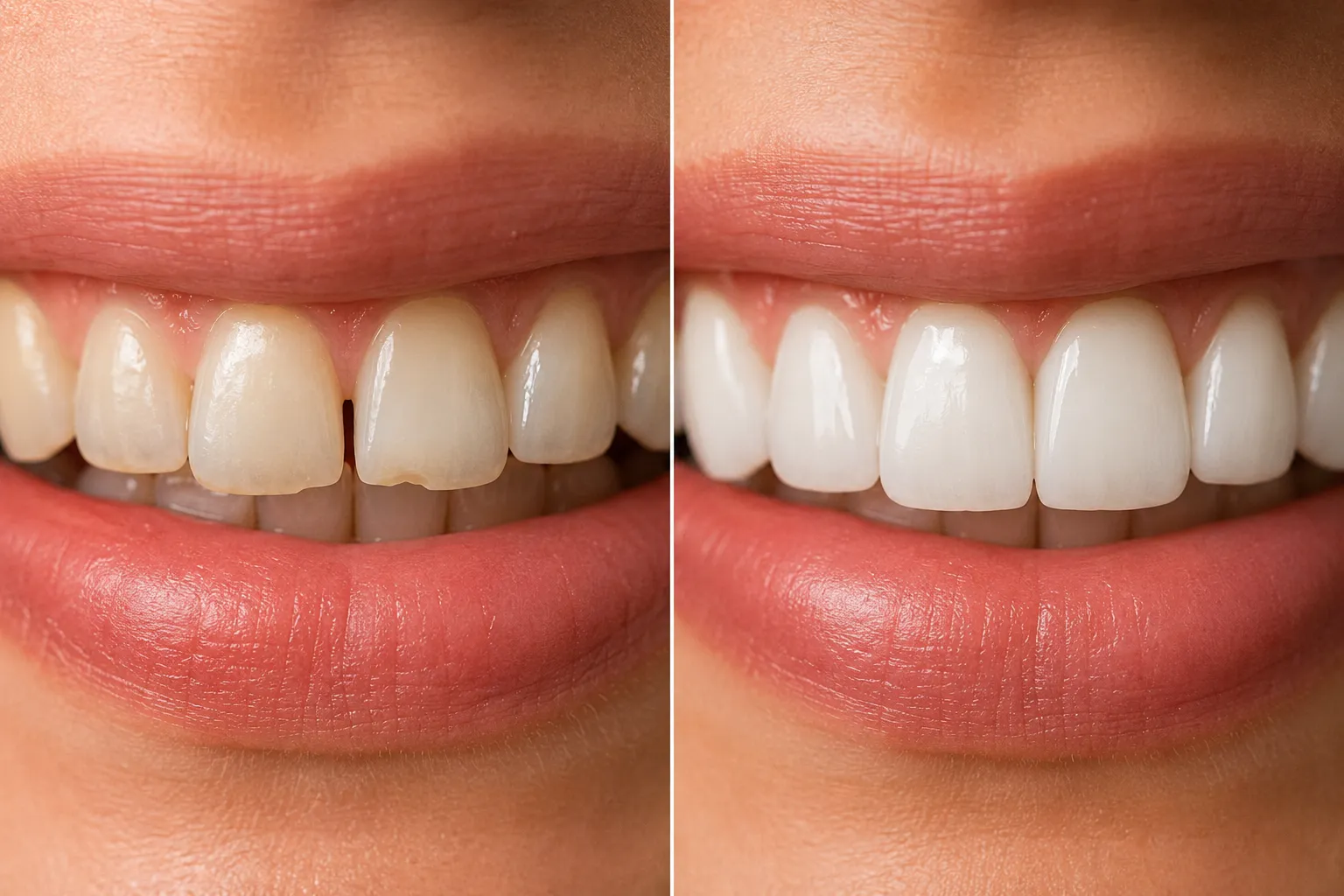
Illustration only. Simulated image, not a photo of an actual patient. Not a guarantee of results. Individual results vary based on your teeth.
The price buys a result that lasts a decade or more, resists stain, and looks like natural enamel. A full set of porcelain veneers corrects color, shape, spacing, and symmetry in two or three visits, which no single other treatment does.
Veneers aren’t always the right answer. For one small chip, bonding does the job for a fraction of the cost. For black triangles, Bioclear is purpose-built. For crooked teeth you’d rather move than cover, Invisalign addresses the alignment itself. Veneers are worth the money when you want to change color, shape, and spacing across the whole smile at once, and they’re overkill when a smaller fix would do.
How to Save on Your Veneer Cost
1. Veneer Only the Teeth That Show
Veneers on every tooth are rarely necessary. Most smiles show 6 to 10 teeth. Veneering only the visible ones keeps the count, and the cost, down.
2. Consider Composite for a Tooth or Two
If one or two teeth are the problem, composite veneers or bonding cost a fraction of porcelain and finish in one visit.
3. Use Pre-Tax Dollars
HSA and FSA accounts cut the effective cost by 20 to 30%. On a full-smile case, that’s real money.
4. Whiten First
Porcelain gets color-matched to the natural teeth at the time it’s placed, so whitening afterward leaves a mismatch. Whiten to your target shade first, then match the veneers to it.
5. Choose an Experienced Cosmetic Dentist
Cheap veneers that look bulky or pick the wrong shade cost more to redo than quality work done once. Front teeth are visible every time you smile, and that’s not where to cut corners.
FAQs About Porcelain Veneer Cost
How much do veneers cost per tooth in Nashville?
Porcelain veneers run $1,800+ per tooth, depending on the material and how much the design has to correct. Composite veneers run $660 to $1,015 per tooth. A full upper smile of 6 to 8 porcelain veneers typically starts around $11,000. A specific quote comes after an exam and a mapped design at the consultation.
What’s the difference between composite and porcelain veneers?
Composite veneers are shaped by hand from resin in one visit and cost less, but they wear and stain sooner, so plan on 5 to 7 years. Porcelain veneers are custom-made in a lab, take two to three visits, cost more, and last 10 to 15 years or longer with better stain resistance. Composite suits one or two teeth on a budget. Porcelain suits a lasting full-smile redesign.
Should I get dental bonding or veneers?
It depends on the size of the fix. For a single chip or small gap, bonding costs $240 to $475 per tooth and finishes in one visit. For a full smile redesign with lasting, stain-resistant results, porcelain veneers are worth the higher cost. Bonding is also reversible since it doesn’t remove enamel. Veneers aren’t.
Can veneers fix black triangles between my teeth?
Veneers can close black triangles, but they’re usually more than the problem needs. For black triangles alone, the Bioclear method closes the gaps without removing enamel and costs about $700 per site. Veneers make sense when you have black triangles plus other concerns like stains or shape you want fixed at the same time. Our black triangles guide covers every option and how each is priced.
Can you get veneers with missing teeth?
No. A veneer is a thin shell bonded to the front of an existing tooth, so it needs a healthy tooth underneath. A missing tooth is replaced with a dental implant or bridge. If you have a gap from a missing tooth plus cosmetic concerns on the surrounding teeth, an implant or bridge can be combined with veneers in one treatment plan.
How many veneers do I need?
It depends on how wide you smile and which teeth show. Many patients veneer the 6 to 8 upper front teeth that are visible. Some need only one to match a single tooth. A few want the lower smile line done too. We map exactly which teeth show in your smile at the consultation and recommend the smallest number that gives an even result.
Do porcelain veneers look natural?
When designed well, yes. Premium porcelain layers color and translucency to catch light the way real enamel does. The result reads as your own teeth, just brighter and more even. Dr. D’Aoust uses digital smile design so you preview the shape and proportion before any tooth is touched.
Do veneers ruin your teeth?
No, but the prep is permanent. Porcelain veneers require removing about 0.5mm of enamel, which doesn’t grow back, so veneers are a long-term commitment. The tooth underneath stays healthy and functional, and when a veneer eventually wears out, it’s replaced rather than removed. If you’d rather not touch the enamel at all, bonding is the reversible alternative.
How long do porcelain veneers last?
Quality porcelain veneers last 10 to 15 years, and many patients get 20 or more with good care. Longevity comes down to habits: daily brushing and flossing, regular cleanings, and not using your teeth as tools. Avoid biting ice, pens, and fingernails, and veneers hold up far longer.
Veneers or Invisalign for crooked teeth?
It depends on whether you want to move the teeth or cover them. Invisalign actually straightens crooked teeth, which is the better long-term answer for real misalignment. Veneers create the look of straighter teeth by covering them, which works for mild cases or when you also want to change color and shape. For significant crowding, we usually recommend aligning first, then veneering only if you still want a cosmetic change.
Next Steps
A consultation with Dr. D’Aoust covers an exam, a digital smile design preview of the result, and your exact price with insurance verified before you decide anything. Patients drive in from across Nashville for cosmetic work, from East Nashville and Sylvan Park to Belle Meade and Green Hills.
Book your first visit online or call (615) 933-5800. You can also contact us with questions.