What Are Craze Lines?
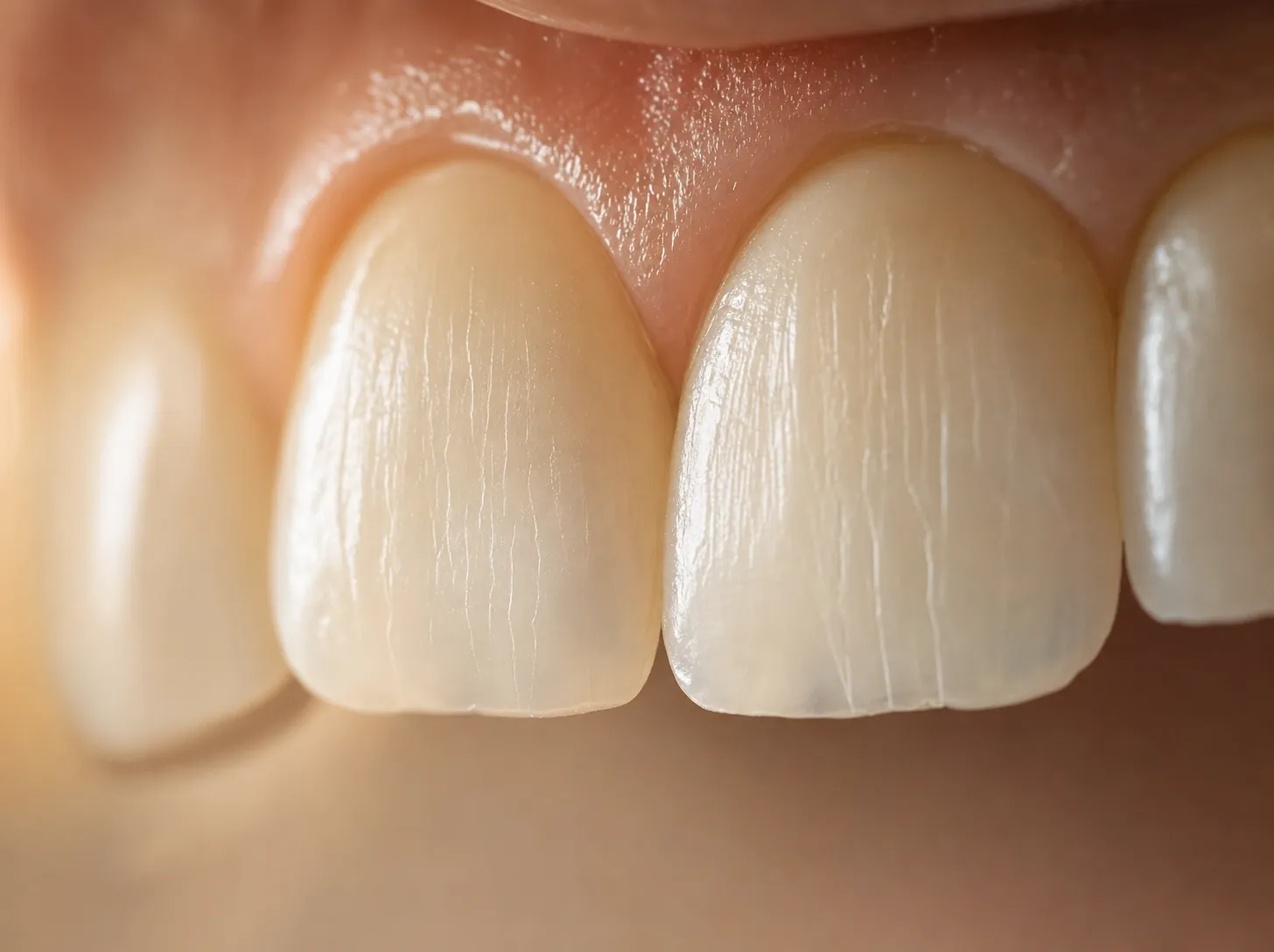
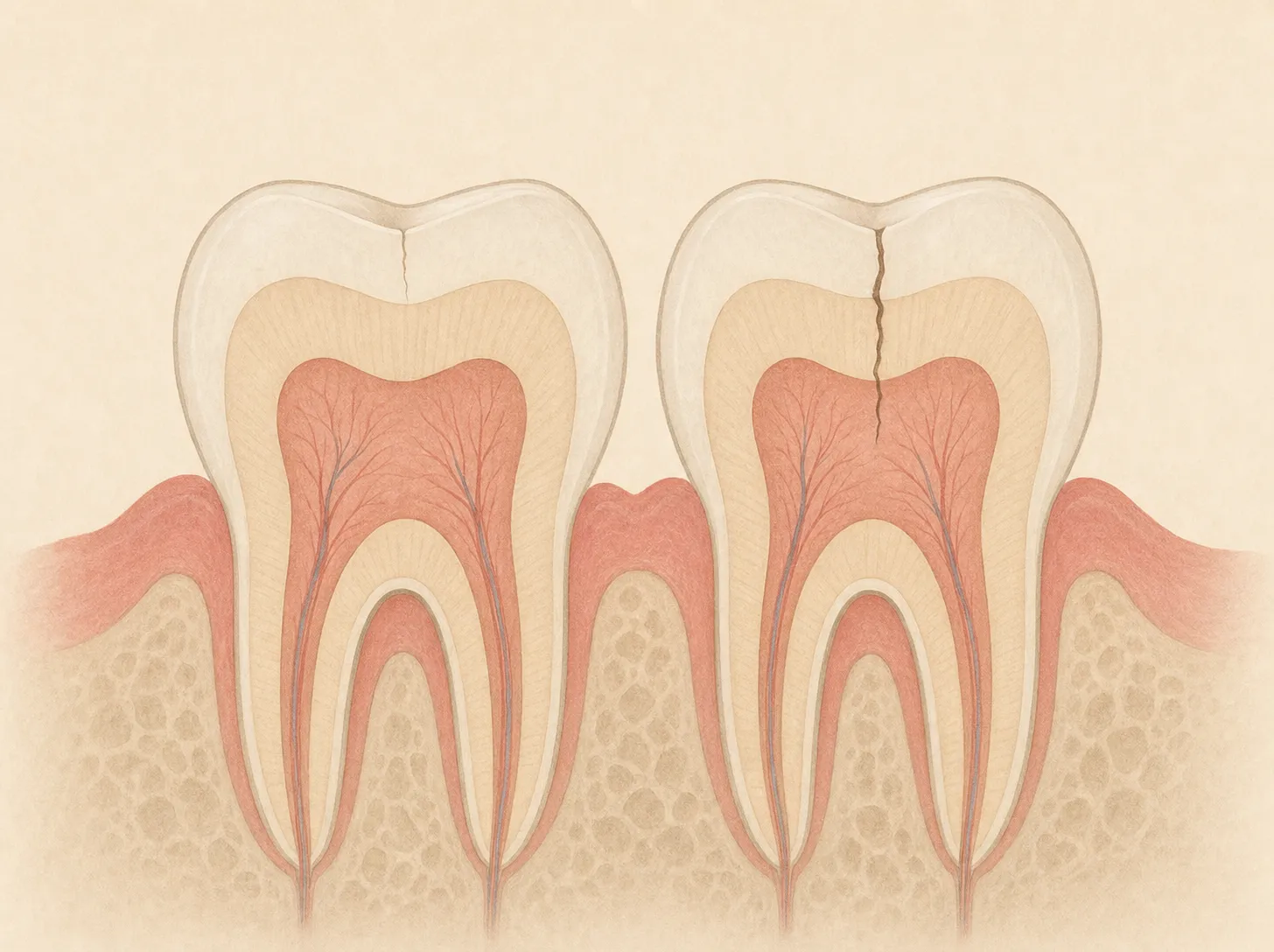
Craze lines are tiny vertical or diagonal cracks confined to the enamel, the hard outer layer of the tooth. Enamel has no nerve endings and no blood supply, so a crack that stays inside it doesn’t hurt and doesn’t put the tooth at risk.
They show up most often on the front teeth, the ones that take the most day-to-day wear from biting, chewing, and grinding. They are easiest to see at certain angles under bright light, which is why people often notice one after years of not seeing it.
Enamel is the hardest substance in the body, and hard does not mean flexible. Every bite, every temperature change, and every year of use puts small amounts of stress on it. Over time that stress shows up as fine surface cracks, closer to a hairline crack in old porcelain than to a structural fracture.
Craze Lines vs. Cracked Tooth: How to Tell the Difference
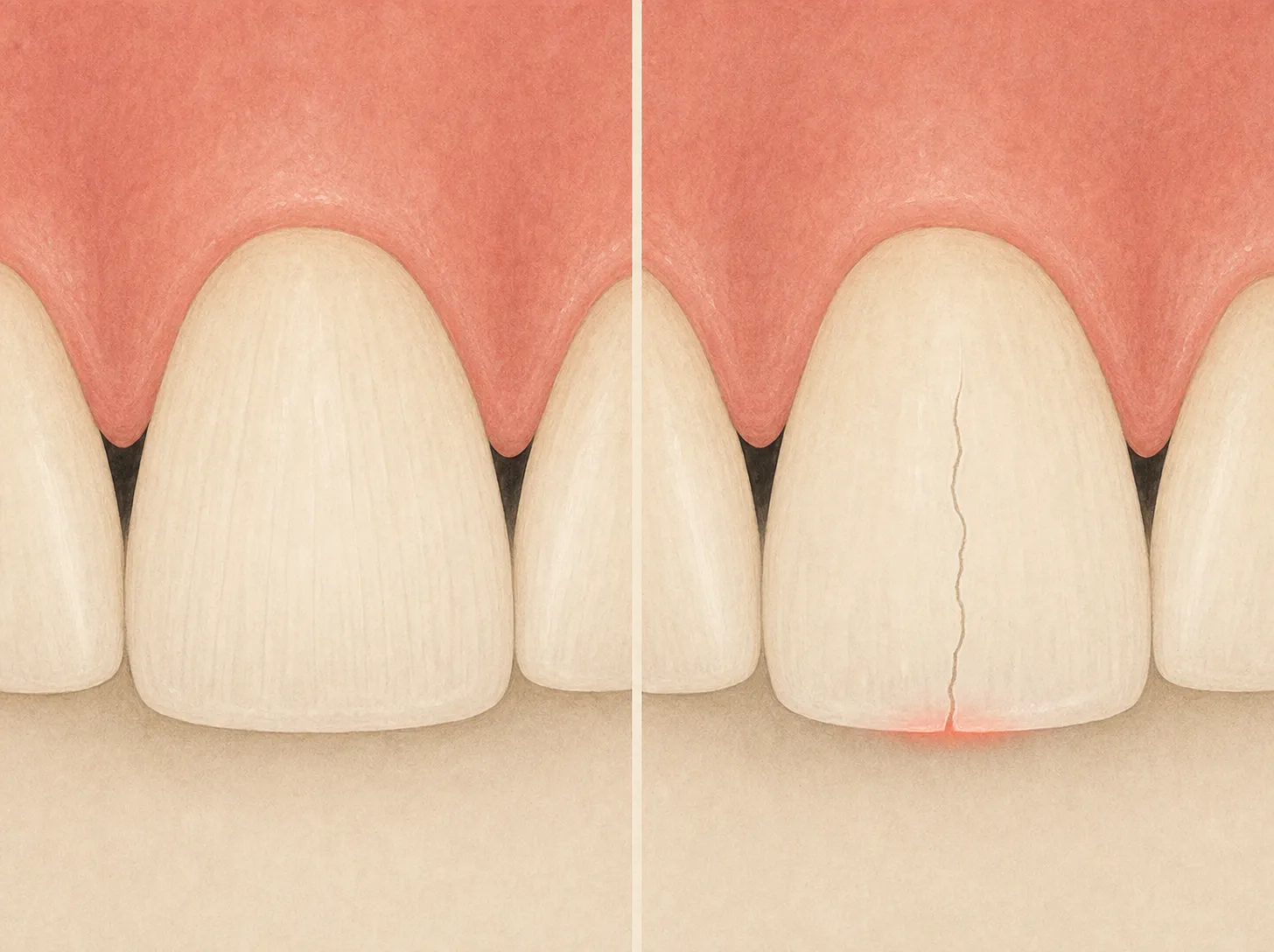
This is the question that actually matters, and the difference comes down to depth and symptoms.
Craze lines:
- Stay inside the enamel only
- No pain, ever, at rest or while chewing
- Don’t get worse or spread over years
- Purely cosmetic
- Common in anyone who’s had teeth for a few decades
A cracked tooth (cracked tooth syndrome):
- Extends deeper, into the dentin or toward the pulp
- Causes sharp pain when you bite down, especially releasing the bite
- Can cause sensitivity to cold or sweet foods
- Can worsen over time and needs treatment
- Often follows a specific event: biting something hard, a blow to the face, a large old filling weakening the tooth
A dentist sorts the two out with a bite test and a transillumination light. The bite test looks for a catch or a sharp pain on release. The light shows how deep a crack runs: a craze line glows as a fine surface line, while a real crack shows a darker path running further into the tooth.
The one-line rule for patients: if it doesn’t hurt when you bite down, it’s very likely a craze line. If biting down causes a sharp, specific pain, especially right when you release the bite, book an exam. That’s the signature of cracked tooth syndrome, and it needs treatment.
What Causes Craze Lines?
- Age and normal wear. Decades of biting and chewing stress the enamel. This is the most common cause, and it’s why craze lines get more common the older you get.
- Teeth grinding (bruxism). Grinding at night puts repeated pressure on enamel well beyond normal chewing forces. Heavy grinders often see translucent, see-through tooth edges develop at the same time.
- Biting hard things. Ice, popcorn kernels, pen caps, fingernails. Any habit that bites something harder than food adds up over years.
- Temperature swings. Enamel expands and contracts slightly with hot and cold. Years of coffee followed by ice water plays a small role.
- Genetics. Some people simply have thinner or more brittle enamel and develop craze lines earlier.
Craze Lines in Your 20s
Seeing craze lines at 25 or 28 catches people off guard, and it isn’t unusual. Grinding, a habit of chewing ice, or naturally thinner enamel can bring them on decades before you’d expect. They mean the same thing at 25 that they mean at 55: shallow surface cracks, no danger to the tooth. If grinding is behind them, a night guard is worth asking about, since grinding is the one cause on this list you can actually slow down.
Are Craze Lines Normal?
Yes. Craze lines are one of the most common findings on a routine exam, especially on the upper front teeth. Having them doesn’t mean you did anything wrong or that your enamel is failing. Most people who ask about them have had the lines for years without any change and without any pain.
How to Fix Craze Lines in Teeth
Most craze lines need no treatment at all. They’re cosmetic, stable, and harmless, and plenty of people leave them alone once they know that.
If yours bother you when you look in the mirror or show up in photos, here’s what actually helps.
Whitening: Proceed With Caution
Whitening lightens the enamel around a craze line, and the crack itself can pick up stain differently than the surrounding tooth, especially if it has been there for years and has absorbed pigment from coffee, wine, or tea. Sometimes whitening makes lines less noticeable. Sometimes it makes them more visible by brightening everything around a line that stays darker.
If you’re considering teeth whitening and have noticeable craze lines, have a dentist look first. An exam tells you which way yours is likely to go before you spend money on a result you don’t want. The same caution applies to white spots on teeth, which can look sharper for a few weeks after bleaching.
Composite Bonding
For lines that bother you cosmetically, composite bonding is usually the right fix. The dentist applies a thin layer of tooth-colored composite resin over the area and polishes it to match the natural tooth, and the line disappears. It’s quick, it doesn’t require removing healthy tooth structure, and it can usually be done in a single visit.
Cost range: $240-$475 per tooth, depending on how many surfaces are involved. Our dental bonding cost guide breaks down pricing by case.
Porcelain Veneers (For More Extensive Cases)
If craze lines show up alongside other cosmetic concerns (chips, discoloration, uneven shape) across several front teeth, veneers can address everything at once. A thin porcelain shell covers the front of the tooth and hides the lines completely along with anything else you want changed.
This is more than craze lines alone call for. It makes sense when you’re already considering a broader cosmetic upgrade.
Cost range: $1,800+ per tooth.
How Much Does Craze Line Treatment Cost in Nashville?
For most people the honest answer is nothing. There’s no clinical need to treat a craze line, so the cost is whatever you choose to spend on cosmetic bonding if the appearance bothers you.
If you do want it addressed, bonding runs $240 to $475 per tooth in Nashville and covers the large majority of craze line cases. Veneers start at $1,800+ per tooth and are reserved for cases that involve more than the lines. Insurance generally treats craze line treatment as cosmetic and doesn’t cover it, though HSA and FSA dollars can be used.
Craze Lines Before and After
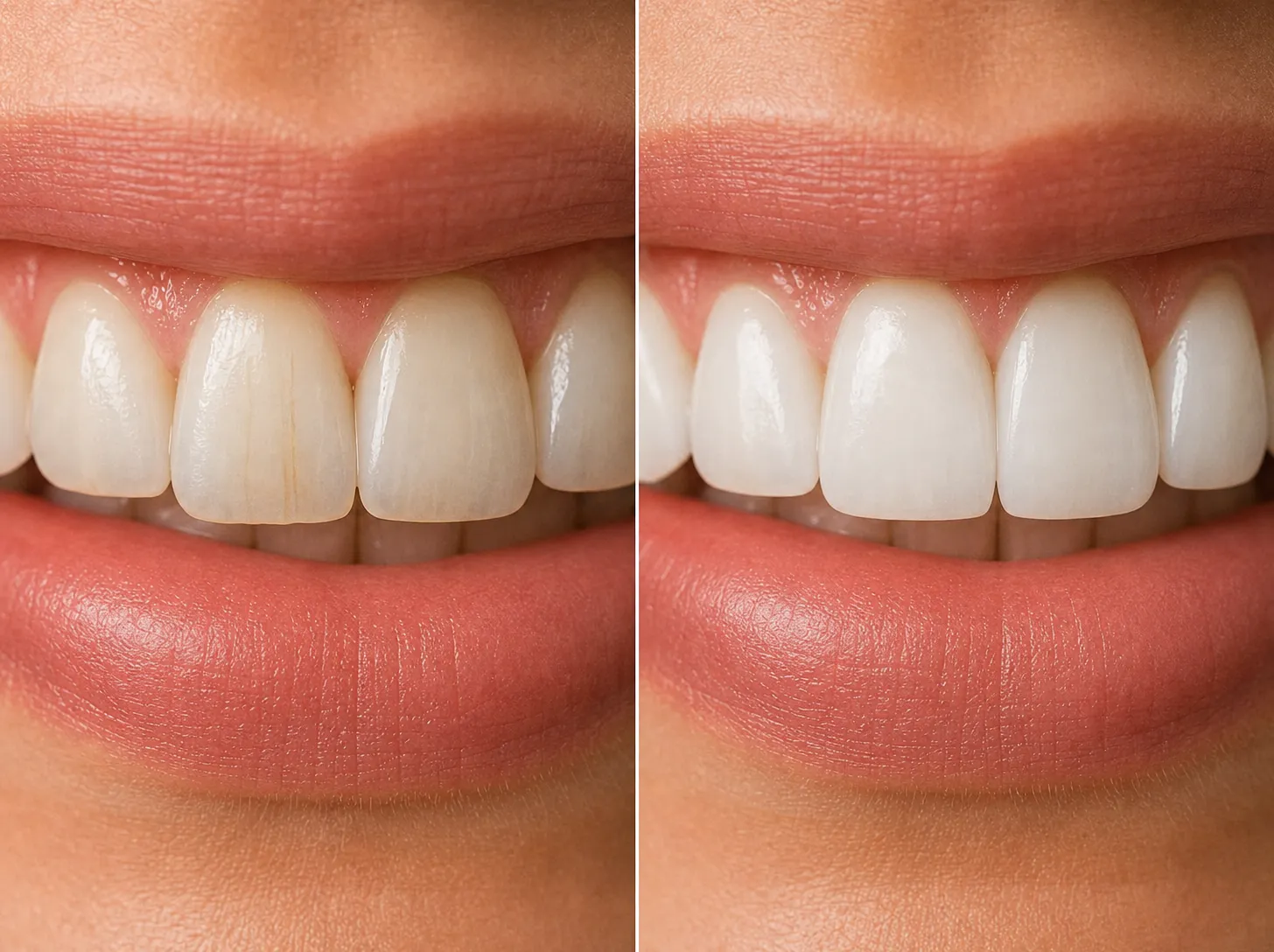
Representative image, not an actual patient photo.
The change with bonding is subtle by design. The goal is the same tooth without the visible line, not a different-looking tooth. A well-matched composite layer blends into the natural enamel, especially in a smile photo or across the room. Bring reference photos to your consult if you want to see how a similar case turned out.
FAQs About Craze Lines
Are craze lines normal?
Yes. They’re common shallow cracks in the outer enamel and show up in most adults over time. Having them doesn’t mean anything is wrong with your teeth.
Craze lines vs. cracked tooth: how do I know which one I have?
Craze lines don’t hurt, ever. A cracked tooth causes sharp pain when you bite down, especially when you release the bite, and often comes with cold sensitivity. If biting hurts, book an exam.
How do I fix craze lines in my teeth?
Most craze lines don’t need fixing. If the appearance bothers you, composite bonding covers the line in a single visit for most patients. Veneers work for more extensive cosmetic cases.
Why do I have craze lines in my 20s?
Grinding, biting hard objects like ice, or naturally thinner enamel can cause craze lines well before middle age. They mean the same thing at any age: shallow, harmless surface cracks.
Will whitening make craze lines worse?
It can go either way. Whitening lightens the surrounding enamel, which sometimes makes a stained line more visible and sometimes makes the whole tooth look more even. Have a dentist check yours before you whiten.
Do craze lines get worse over time?
No. Unlike a real crack, craze lines stay confined to the enamel and don’t spread deeper or get longer. If a line does seem to be changing, that’s worth an exam.
Does insurance cover craze line treatment?
Usually not, since there’s no structural or clinical need to treat them. If you choose bonding for cosmetic reasons, it’s typically an out-of-pocket cost, though HSA/FSA dollars can be used.
Next Steps
If you’re not sure whether what you’re seeing is a craze line or something that needs attention, an exam is the fastest way to know. Dr. D’Aoust checks depth, tests for pain on biting, and tells you plainly what you’re looking at, then quotes bonding by the tooth if you want the line covered.
Book your first visit online or call (615) 933-5800. You can also contact us with questions.