What Causes White Spots on Teeth?
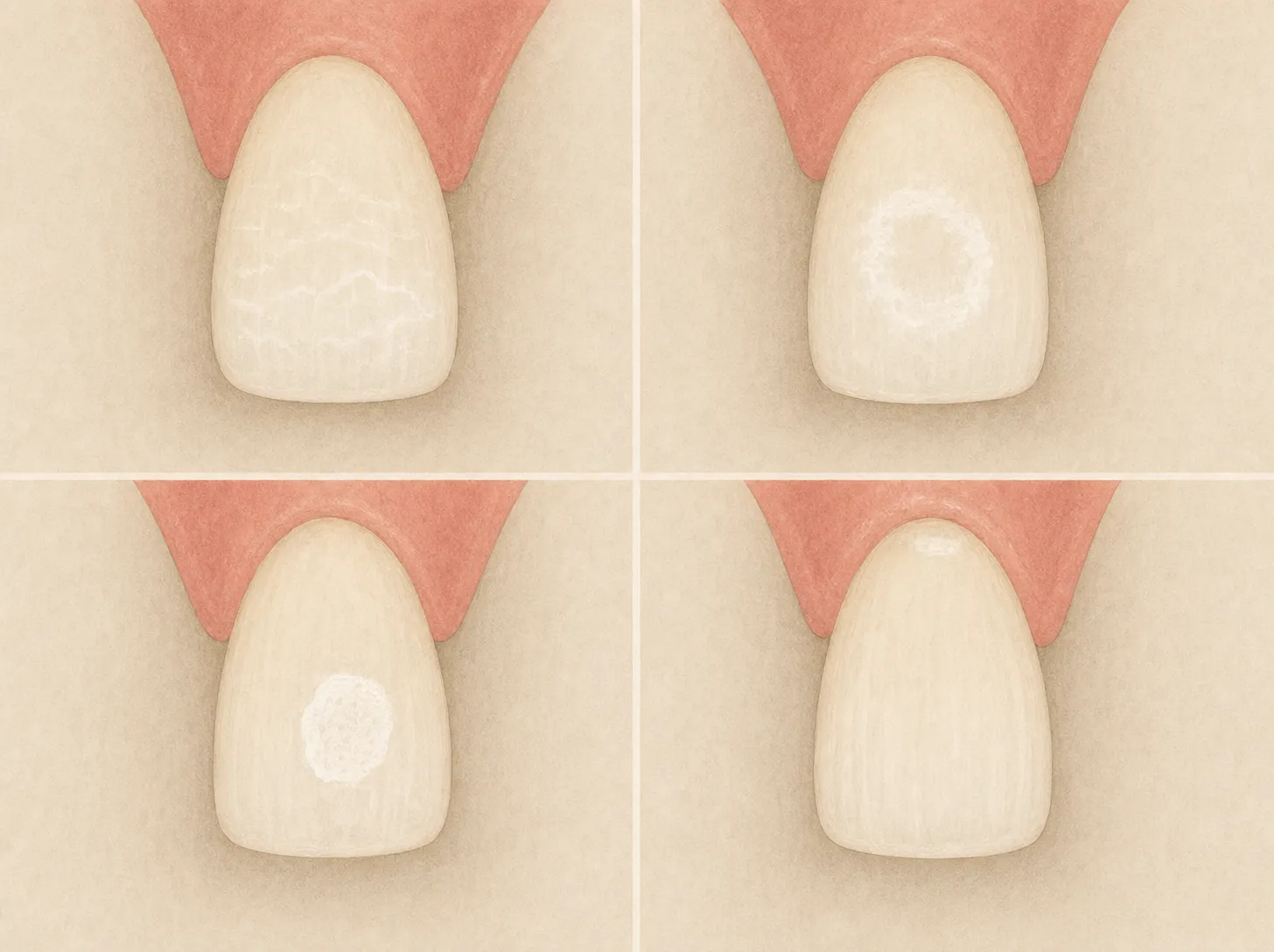
Fluorosis
Fluorosis happens when a child gets too much fluoride while their adult teeth are still forming under the gums, usually between ages 1 and 8. The extra fluoride disrupts enamel formation and leaves faint white streaks, lacy patches, or, in more noticeable cases, larger chalky areas.
Fluorosis is not decay and it is not dangerous. It comes from swallowing fluoridated toothpaste, drinking fluoridated water while also taking fluoride supplements, or a combination of sources during those early years. Once the adult teeth erupt, the fluorosis pattern is set. It does not get worse and it does not spread.
Most fluorosis is mild: a few faint white flecks that are hard to see except up close. Moderate to severe fluorosis covers more of the tooth surface, and that is the kind patients usually ask about.
Decalcification (Often After Braces)
Decalcification is mineral loss from the enamel surface, and it is the most common reason for white spots in teenagers and adults. Plaque sits against the tooth, acid from bacteria pulls calcium and phosphate out of the enamel, and the demineralized area turns opaque white because it reflects light differently than healthy, translucent enamel.
Decalcification is not the same thing as fluorosis. Fluorosis forms while the tooth is still developing under the gum. Decalcification happens after the tooth has erupted, from plaque sitting in one spot too long.
Enamel Hypoplasia
Enamel hypoplasia is a developmental defect where the enamel did not form with its full thickness or mineral content in specific spots. Causes range from a high fever or illness during infancy, to certain medications, to premature birth, to no identifiable cause at all. The spots can be single or scattered across several teeth, and they are not tied to fluoride exposure the way fluorosis is. Thin enamel from hypoplasia can also make tooth edges look translucent and see-through, so some people notice both at once.
Early Tooth Decay (The One to Watch)
Early decay is the cause that needs prompt attention. It starts as a small white spot lesion right where plaque accumulates, usually near the gumline or between teeth. At this stage the enamel surface is still intact and only demineralized. It is the same process as decalcification, concentrated in one place and progressing.
Here is the difference that matters. An early decay spot can still be caught and in some cases remineralized before it becomes an actual cavity. Left alone, it keeps demineralizing until the surface breaks down and a cavity forms. A new white spot near your gumline or between two teeth is worth a dental exam soon. It is not an emergency, but catching it early gives you the most options.
White Spots on Teeth After Braces
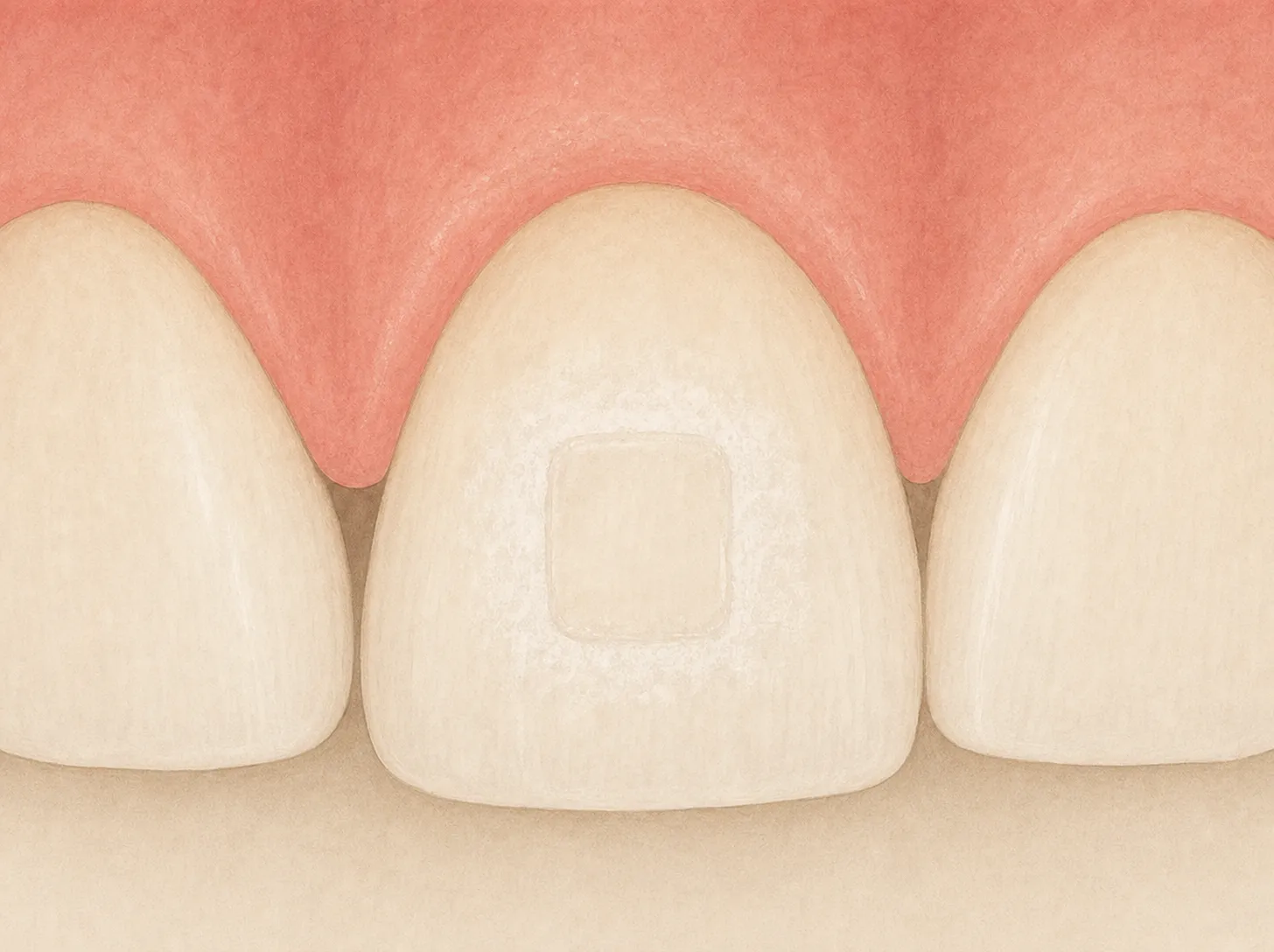
White spots after braces catch people off guard, because they expected straighter teeth and got new white patches instead.
Brackets create dozens of small ledges where plaque collects. If brushing around the brackets is not thorough for months at a time, the enamel right around each bracket demineralizes. When the braces come off, there is a ring or patch of white, chalky enamel where the bracket used to sit, surrounded by normal enamel.
In most cases this is decalcification rather than decay, especially when it is caught and treated soon after debonding. The enamel is intact and only demineralized. Fluoride varnish, remineralizing toothpaste (with CPP-ACP or a higher fluoride concentration), and time can improve mild cases. For spots that do not fade with home care, or that a patient wants addressed right away, cosmetic bonding or Bioclear blends the demineralized area into the surrounding enamel.
If you are finishing orthodontic treatment soon and want to avoid this, ask your orthodontist about fluoride varnish appointments during treatment and stay on top of brushing around each bracket. Once the spots are there, home care alone often is not enough to clear them completely.
White Spots on Teeth After Whitening
White spots that show up right after whitening are usually temporary. Whitening gel dehydrates the enamel slightly, and areas of the tooth that already had subtle mineral differences (existing fluorosis, hypoplasia, or old decalcification) look more pronounced because the rest of the tooth got so much whiter around them.
This normally fades within a few days to about a week as the tooth rehydrates. If the spots are still noticeable after a week or two, they were most likely there before whitening and were just less visible against the original tooth shade. At that point bonding or Bioclear can blend them in. Any new material should be matched after the whitening has fully settled, so the shade match holds.
White Spots on a Toddler’s Teeth
White spots on a toddler’s baby teeth are almost always mild fluorosis from swallowing toothpaste, early enamel hypoplasia, or an early decalcification spot from milk or juice sitting against the teeth. That last one is common with bottle or sippy cup habits at bedtime.
A few things are worth doing at home: use a rice-grain smear of toothpaste for kids under 3 and a pea-sized amount after that, supervise brushing until your child can spit reliably, and avoid putting your toddler to bed with a bottle of anything but water.
Do not try to diagnose or treat this at home. A pediatric dentist can tell you in one visit whether the spot is fluorosis, hypoplasia, or early decay, and each of those calls for a different response. If your child has not had a first dental visit yet, this is a good reason to schedule one. Our pediatric dentistry page explains what a first visit looks like.
How Dentists Remove or Treat White Spots
Treatment depends on the cause, so a diagnosis comes before any fix.
Resin Infiltration and Bioclear
For fluorosis, decalcification, and hypoplasia spots that do not respond to remineralizing products, resin infiltration is often the most conservative option. A low-viscosity resin is applied to the porous, demineralized enamel, where it fills the microscopic pores that scatter light and make the spot look white and chalky. Once it hardens, the resin refracts light much like healthy enamel, so the spot blends in instead of disappearing outright.
The Bioclear technique suits white spot cases where the spot sits near the edge of the tooth or the demineralized area is more extensive. Bioclear uses a shaped matrix and injected composite to blend the discoloration and refine the tooth’s contour in the same visit. It is the same technique used for closing black triangles between teeth, applied here to color-masking instead of gap closure.
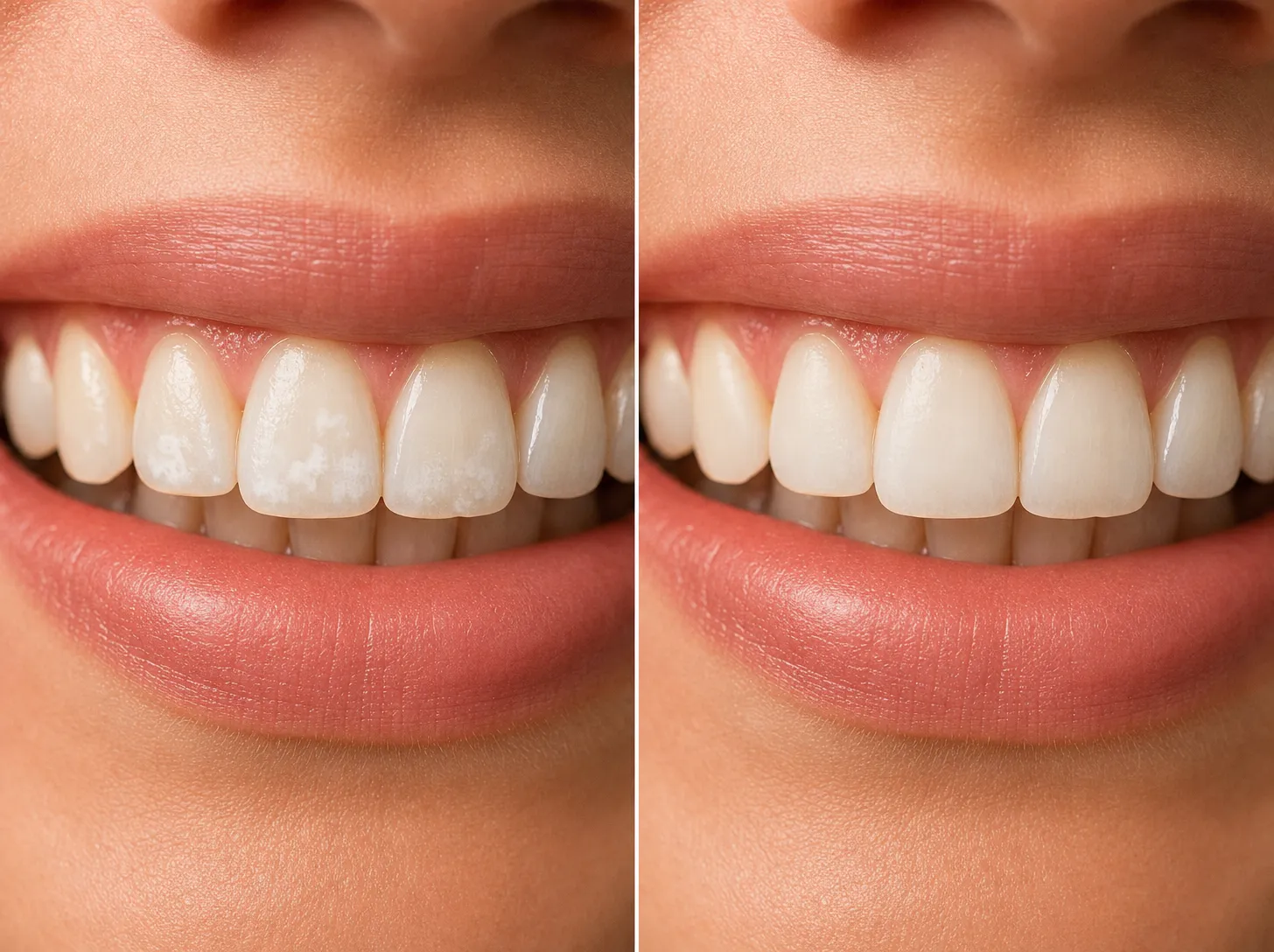
Representative image, not an actual patient photo.
Composite Bonding
For a single stubborn spot, or a spot combined with a small chip or rough patch, composite bonding works well. The dentist removes a thin layer of the discolored enamel, places a color-matched composite resin over the area, then shapes and polishes it to match the surrounding tooth.
Whitening (With a Caveat)
Whitening can blend very mild, faint spots by lightening the rest of the tooth toward the spot’s shade. It can also make moderate spots look more obvious for a short time before they settle down, for the dehydration reason described above. A common approach is professional whitening first for mild, diffuse fluorosis, then a reassessment a few weeks later to see whether bonding or Bioclear is still needed for any remaining spots.
Microabrasion
For very superficial, faint white spots, gently polishing away the outermost layer of enamel with a mildly abrasive compound can reduce or eliminate the discoloration without adding any material to the tooth. This works best on shallow spots and is often combined with resin infiltration for a more complete result.
Do White Spots Go Away on Their Own?
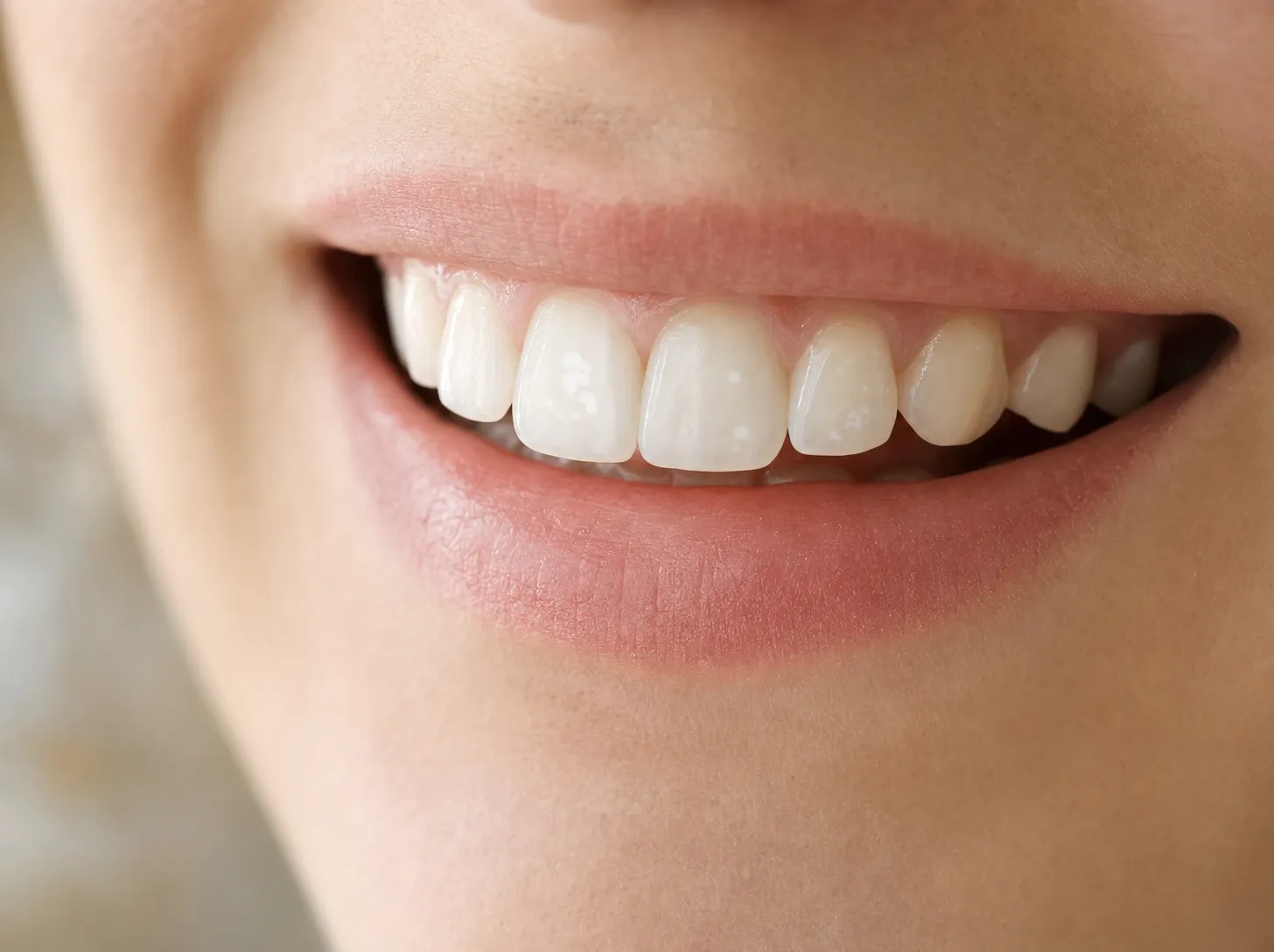
Mostly, no. Fluorosis and hypoplasia are permanent changes to how the enamel formed, and neither resolves without treatment. Decalcification can improve with fluoride and good hygiene if it is mild, but it rarely disappears completely without professional treatment. Early decay does not go away on its own. Left untreated, it keeps demineralizing and can turn into a cavity.
The one real exception is the temporary dehydration effect after whitening, which resolves by itself within days to about a week.
If you are hoping a spot will fade on its own, give it a few weeks of consistent oral hygiene and, if it is fresh decalcification, a remineralizing toothpaste. If it is still there after that, it is not going anywhere without treatment.
How Much Does White Spot Treatment Cost in Nashville?
Cost depends on which approach fits your case and how many teeth are involved.
- Bioclear (per site): around $700
- Composite bonding (per tooth): $240 to $475, depending on how much of the tooth surface needs coverage
- Teeth whitening (in-office plus take-home combo): $550
Most patients with a single stubborn spot, or a small cluster from braces, fall into the bonding range. Patients with more extensive fluorosis or hypoplasia across several teeth, or who want the smoothest and most durable blend, usually do better with Bioclear. You get a specific recommendation and a quote at the consultation, once the spots have been seen under the same light you notice them in.
FAQs About White Spots on Teeth
What causes white spots on teeth?
Four main causes: fluorosis (too much fluoride while adult teeth were forming), decalcification (mineral loss, often from plaque or braces), enamel hypoplasia (a developmental enamel defect), and early tooth decay. A dental exam tells you which one you have.
How do you get rid of white spots on teeth?
Resin infiltration, Bioclear, and composite bonding all blend the discoloration into the surrounding enamel. Whitening can help with mild, diffuse spots. Microabrasion works on very superficial spots. The right option depends on the cause and how deep the discoloration goes.
What are white calcium spots on teeth?
These are almost always fluorosis or decalcification rather than an excess of calcium. The white appearance comes from a change in how light passes through the enamel, either from developmental changes (fluorosis) or mineral loss (decalcification). Extra mineral buildup is not the cause.
Why do I have white spots on my teeth?
The most common reasons in older kids and adults are fluorosis from childhood, decalcification around old braces brackets, or a demineralized spot near the gumline from plaque. An exam can tell you which one applies to you.
Are white spots on teeth a sign of tooth decay?
Sometimes. A white spot lesion right at the gumline or between teeth can be the earliest stage of decay, before a cavity forms. Fluorosis and hypoplasia spots are not decay and do not progress. If a new white spot shows up where plaque tends to collect, get it checked.
Why do I have white spots on my teeth after braces?
Plaque builds up around brackets more easily than on bare enamel. If brushing was not thorough around the brackets for months at a time, the enamel underneath demineralizes and shows up as a white patch once the braces come off.
Do white spots on teeth go away after whitening settles?
Spots that appeared or worsened right after whitening usually fade within days to about a week, as the enamel rehydrates. Spots still visible after two weeks were most likely there before whitening and will need bonding or Bioclear to blend in.
Should I worry about white spots on my toddler’s teeth?
See a pediatric dentist rather than guessing. Mild fluorosis and hypoplasia are common and not urgent, but only an exam can rule out early decay, which does need attention.
Next Steps
A white spot consultation at our West Nashville office takes about half an hour: an exam to identify the cause, a look at the options that fit your teeth, and a quote before you decide anything.
Book your first visit online or call (615) 933-5800. You can also contact us with questions first.