How Much Does a Dental Crown Cost in Nashville?
The short answer is $1,400 to $1,800 per tooth for a dental crown. Where you land depends on the material and whether the tooth needs extra work before the crown goes on.
Here is the Nashville crown cost breakdown by material:
| Crown Type | Cost Per Tooth | Best For |
|---|---|---|
| Porcelain / all-ceramic | $1,750 - $1,800 | Front teeth, where the look matters most |
| Zirconia | $1,700 - $1,800 | Back teeth and heavy grinders who need strength |
| Porcelain-fused-to-metal | $1,400 - $1,565 | A durable option when the tooth is less visible |
Some teeth need groundwork first. If decay or an old filling left too little tooth to hold a crown, the dentist rebuilds the core before the crown goes on, and that adds to the total. If the tooth needs a root canal first, that is a separate cost on top of the crown. A dentist can tell you exactly what your tooth needs at the exam, before any work starts.
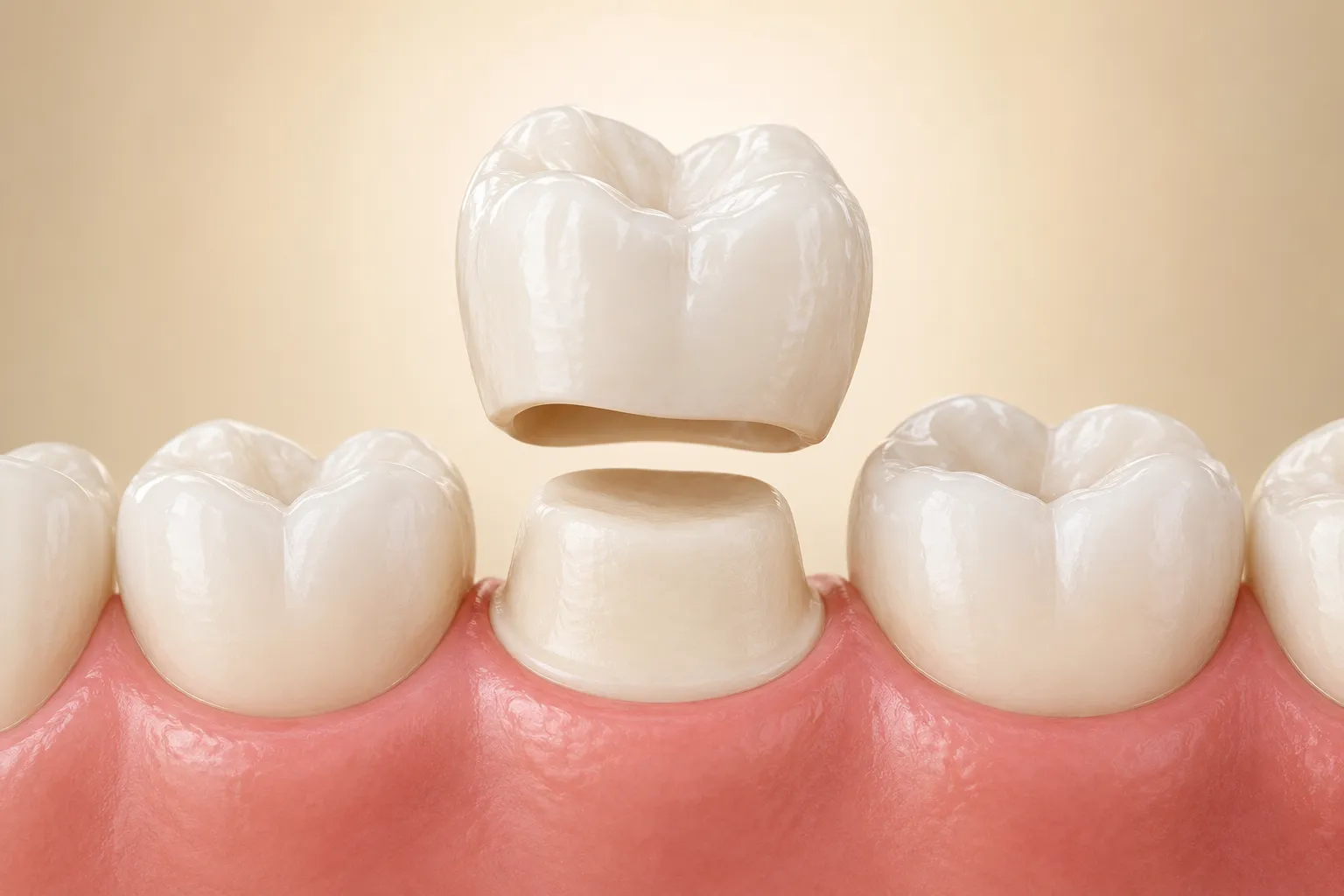
What Affects Your Crown Cost?
A simple crown on a healthy tooth and a crown that follows a root canal are not priced the same. These are the factors that change the quote.
Material
Porcelain and all-ceramic crowns cost the most because they look the most like a real tooth, which matters on front teeth that show when you smile. Zirconia is the strongest option and holds up to heavy biting forces, so it is the usual pick for molars. Porcelain-fused-to-metal costs less and lasts well, though the metal base can show as a thin dark line at the gumline over the years.
Whether the Tooth Needs a Buildup
When a tooth is badly broken down, there is not enough structure left to anchor a crown. Rebuilding that core (a buildup, or a post and core for root-canal teeth) is a separate line item on the quote. Healthy teeth with a clean fracture often skip this step.
Whether You Need a Root Canal First
A deep crack or decay that reaches the nerve means the tooth needs a root canal before it is crowned. That is common, and it is a separate procedure with its own cost. A root canal plus a crown saves a tooth that would otherwise come out.
Tooth Location
Front teeth demand precise shade matching and shaping, so the work takes longer. Back teeth take more force, so the material choice leans toward strength. Both factor into the final number.
Provider Experience
A crown that fits right seals out decay and lasts longer. Digital impressions and a good lab produce a crown that matches your bite and your surrounding teeth. A crown that fits poorly costs you again in a few years.
Does Insurance Cover Dental Crowns?
Usually, yes. This is the big difference between a crown and cosmetic work like veneers. Because a crown restores a damaged tooth, most plans classify it as restorative and pay a real share of the cost.
What to expect from a typical plan:
- Coverage rate. Most plans cover 50% to 80% of a crown as a restorative procedure.
- Annual maximum. Often $1,000 to $2,500. A single crown can use a good chunk of one year’s benefit.
- Waiting period. Some plans make you wait 6 to 12 months before they cover major work like crowns.
Example: What You’d Pay for a Crown
A realistic Nashville scenario for a crown on a cracked molar, with a plan that covers 60% of restorative work:
- Zirconia crown: $1,700
- Insurance pays (restorative, 60%): -$1,020
- Your out-of-pocket: $680
Actual numbers depend on your plan and how much of your annual maximum is left.
How to Pay for a Crown
For the portion insurance does not cover, most Nashville patients spread it out.
Financing
Most practices work with a financing partner that runs a soft credit check, approves in minutes, and offers monthly terms. Qualified patients often get 0% APR.
HSA and FSA
A crown qualifies as a medical expense, so you can pay with pre-tax dollars and cut your effective cost by 20% to 30%. If your FSA resets at year-end, use those dollars before they expire.
In-House Payment Plans
Some offices split a larger case, like a crown plus a root canal or a buildup, across several payments so the monthly number stays manageable.
Dental Crown Cost vs. Bonding, Veneers, and Implants
A crown is not always the answer. Here is how it compares to the alternatives so you do not overspend or under-treat:
| Option | Cost Per Tooth | Lifespan | Best For |
|---|---|---|---|
| Composite bonding | $240 - $475 | 5 - 10 years | Minor chips and small cracks |
| Dental crown | $1,400 - $1,800 | 10 - 15+ years | Cracked, heavily filled, or root-canal teeth |
| Porcelain veneer | $1,800+ | 10 - 15+ years | Cosmetic redesign of front teeth |
| Dental implant (all-in) | $5,000 - $5,500 | 25+ years | Replacing a tooth that can’t be saved |
When a Crown Is the Right Call
- The tooth is cracked or heavily filled. A crown holds the whole tooth together. Bonding or a filling can’t.
- You just had a root canal. A root-canal tooth turns brittle and needs a crown to keep it from fracturing.
- The damage is too big for bonding. Large breaks and worn-down molars need the strength of a crown.
- You want it to last. A well-fitted crown runs 10 to 15 years and often longer.
When Something Else Makes More Sense
- The chip is small. Bonding fixes minor chips for a fraction of a crown’s cost, in one visit.
- It’s purely cosmetic. If the tooth is healthy and you want to change its look, a veneer removes less tooth than a crown.
- The tooth can’t be saved. If a tooth is cracked below the gumline or too decayed to restore, a dental implant replaces it for good.
Is a Dental Crown Worth the Cost?
For a cracked, heavily filled, or root-canal-treated tooth, yes.
The real alternative to crowning a brittle tooth is often losing it, and replacing a missing tooth with a dental implant runs $5,000 or more once you add the post, abutment, and crown. A crown protects the tooth you still have for a fraction of that, and it is the kind of work insurance usually helps pay for.
A crown will not fix a tooth that is beyond saving, and it is overkill for a small chip. For a tooth that is cracked and aching every time you chew on that side, it is what keeps the tooth in your mouth.
How to Save on Your Crown Cost
1. Use Your Insurance
Crowns are usually covered as restorative work. Make sure your dentist documents the crack, decay, or root canal that makes the crown medically necessary rather than cosmetic.
2. Time It With Your Annual Maximum
If your plan year resets soon, scheduling before the reset, or splitting work across two plan years, stretches your benefit further.
3. Use Pre-Tax Dollars
HSA and FSA accounts cut your out-of-pocket by 20% to 30%. On a $700 balance after insurance, that is real money.
4. Don’t Wait
A small crack that needs a crown today can split further and need an implant later. Treating it early keeps you in the lower-cost lane.
5. Choose an Experienced Dentist
A crown that fits right seals out decay and lasts. A poorly fitted one fails early and costs you the whole price again.
FAQs About Dental Crown Cost
How much does a dental crown cost in Nashville?
$1,400 to $1,800 per tooth, depending on the material. Porcelain and all-ceramic crowns sit at the top of that range, zirconia close behind, and porcelain-fused-to-metal a bit lower. A buildup, if the tooth needs one, is quoted separately. Most insurance plans cover 50% to 80% as restorative work, so your out-of-pocket is usually far less.
Does insurance cover dental crowns?
Most plans do, because a crown restores a damaged tooth rather than just improving its looks. Expect 50% to 80% coverage as a restorative procedure, up to your annual maximum (often $1,000 to $2,500). Purely cosmetic crowns on healthy teeth are the exception and may not be covered.
How much is a crown after a root canal?
The crown itself runs $1,400 to $1,800. The root canal is a separate cost, and root-canal teeth often need a post and core buildup to anchor the crown, which is quoted separately too. A root canal plus a crown still costs less than removing the tooth and replacing it with an implant.
Porcelain or zirconia crown, which is better?
It depends on the tooth. Porcelain and all-ceramic crowns look the most natural, so they are ideal for front teeth. Zirconia is stronger and stands up to heavy chewing and grinding, so it is the usual choice for molars. Dr. D’Aoust recommends the material that fits the tooth’s location and your bite.
Do you offer same-day crowns in Nashville?
We make lab-crafted crowns over two visits rather than milling them same-day. The first visit preps the tooth and places a temporary crown. About one to two weeks later, the finished crown comes back from the lab and we fit and cement it. The extra step lets the lab build a crown that matches your bite and shade precisely.
How long do dental crowns last?
Most crowns last 10 to 15 years, and many go 20 or more with good care. Longevity comes down to your habits: brush and floss daily, keep up with cleanings, and don’t use your teeth to open packages or chew ice. If you grind your teeth, a night guard protects the crown.
Is a crown better than a filling?
For a small cavity, a filling is enough. For a tooth that is cracked, heavily filled, or weakened, a filling can’t hold it together and a crown can. The general rule: when too much tooth is missing or fractured for a filling to be reliable, a crown is the durable fix.
What if my crown falls off?
Keep the crown, protect the tooth with pharmacy dental cement if you have it, and call us. A lost crown isn’t usually an emergency, but the exposed tooth can be sensitive. Our dental emergency guide walks through what to do until your appointment.
Next Steps
Every tooth is different, and the only way to know your real cost is an exam. At Nations Dental Studio in The Nations, Dr. D’Aoust examines the tooth, takes a digital impression, and tells you what it needs and what it will cost, with insurance and financing sorted out before any work starts.
Book your consultation online, call (615) 933-5800, or contact us with questions.