What Makes Dentures Look Real
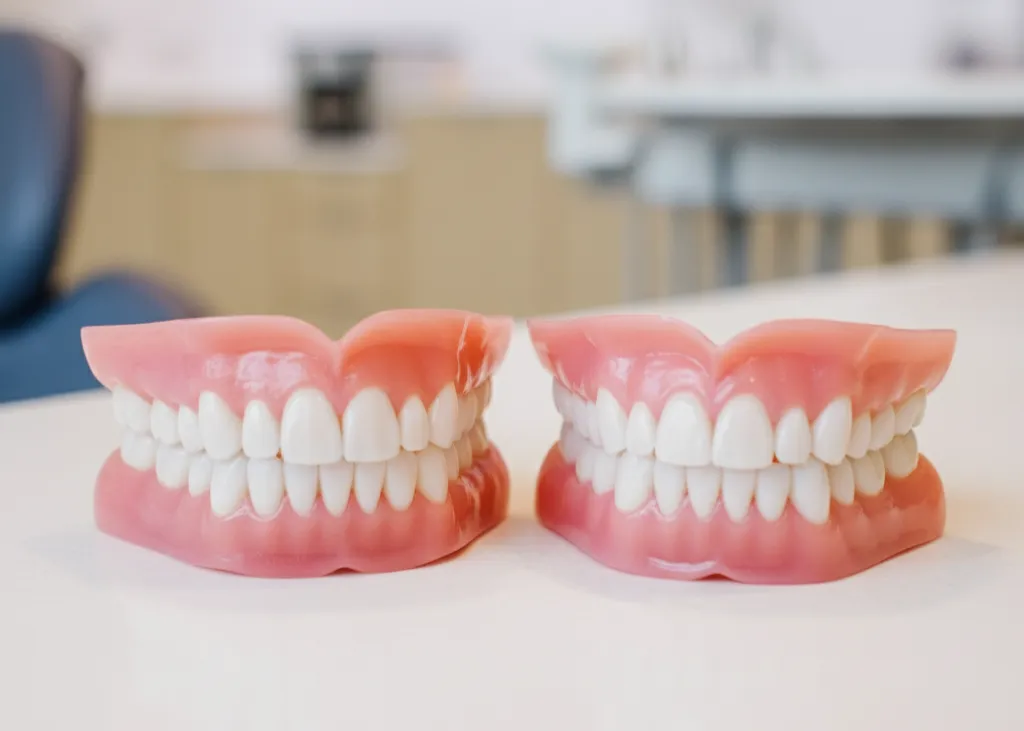
A natural-looking denture is the result of three things working together: the materials, the dentist’s eye for detail, and how much time goes into customizing the fit and appearance. Skip any of them and the result starts to look like dentures.
Materials That Behave Like Real Teeth
Real enamel is slightly translucent. Light passes through the edge of each tooth and reflects back from the layer underneath. Cheap denture teeth are solid plastic, so light bounces off the surface and the smile reads as flat. Premium teeth use layered acrylic or porcelain that mimics how enamel actually handles light.
The base matters just as much. A quality denture base is tinted to match your gum tone, with subtle variation across the surface so it doesn’t look painted on. The transition from gum to tooth is where most dentures give themselves away. Done right, that transition disappears.
Customization to Your Face
Stock denture teeth come in standard sizes and shapes. Pulling them out of a tray and setting them in a denture is fast, but the result is a smile that belongs to nobody in particular.
A natural-looking denture starts with how your smile used to look, or how it should look given your face shape, age, and skin tone. That means:
- Tooth size and shape chosen for your face rather than from a catalog
- Tooth shade matched to your remaining teeth or to a color that fits your age and complexion
- Slight asymmetries kept in place, because real teeth are never perfectly identical
- Lip support adjusted so your face doesn’t look sunken or stretched
When patients say their old dentures made them look “off,” this is usually what they’re describing. The teeth were fine. The setup wasn’t theirs.
Modern Fabrication
Digital impressions, 3D printing, and CAD/CAM design have changed what’s possible. A digital scan maps the fit of your mouth at a resolution traditional putty molds can’t match, which means fewer adjustments, better fit, and a more predictable aesthetic result. The technology is one part of the picture, and a practice still working from putty impressions and stone models has a harder time hitting that level of precision. See how we build custom dentures in Nashville from digital scans through final delivery.
Are Dentures Comfortable? What Patients Actually Mean by “Most Comfortable”
Comfort is the second question after appearance, and it’s where expectations and reality often miss each other.
A well-made denture should feel stable when you talk, chew, and laugh. It should not click, slip, or rub a sore spot. After the first two to three weeks of adjustment, most people mostly forget they’re wearing it.
What separates a comfortable denture from a frustrating one:
- Fit. A denture that’s even slightly off creates pressure points. Pressure points cause sore spots, and sore spots are why some patients leave their dentures in a drawer. Multiple fittings during fabrication catch this before it becomes a problem.
- Bite alignment. Your upper and lower teeth need to meet evenly. If they don’t, your jaw muscles compensate, and you’ll be tired or sore by the end of the day.
- Suction, or retention from implants. A traditional upper denture relies on suction against the roof of your mouth. Lowers have a harder time because the tongue moves and there’s less surface area. Patients struggling with lower dentures are usually the best candidates for implant-supported options.
- The material against your gums. Premium denture bases are smoother, less porous, and easier on tissue than budget acrylics.
The most comfortable full dentures are almost always implant-supported. Two to four implants per arch hold the denture in place so it doesn’t shift, doesn’t need adhesive, and handles tougher food. For patients who can’t have implants or don’t want them, a precise traditional denture from a dentist who takes the time to get the fit right is the next best thing.
Types of Dentures
The right type depends on how many teeth you’re replacing and what you want the result to do for you.
Full Dentures
Full dentures replace every tooth in your upper jaw, lower jaw, or both. A modern set:
- Sits against your gums with a secure fit
- Supports your cheeks and lips so your face keeps its proportions
- Is shaped and shaded to match the smile you want
This is the option most patients picture when they think “dentures.” Whether a set passes for natural teeth comes down to the dentist designing it and the lab building it.
Partial Dentures
Partials fill the gaps when you still have some natural teeth. They clip onto your remaining teeth and replace the missing ones, which keeps the natural teeth from drifting and preserves your bite.
Partials come in acrylic, metal framework, or flexible thermoplastic. Each has tradeoffs in appearance, comfort, and durability, and the right choice depends on which teeth you’re replacing and how visible the clasps will be.
Implant-Supported Dentures
A few dental implants per arch anchor a denture so it doesn’t move. For patients who can stretch the budget, this is usually the better long-term option:
- The denture stays put, even when you chew tough food
- No adhesive, no slipping mid-sentence
- Implants stimulate the jawbone so it doesn’t shrink the way it does under a traditional denture, which is what causes the sunken face appearance after years of wearing conventional dentures
- The appearance is better because the denture can be designed for looks rather than for staying in place
Implant-supported dentures cost more upfront and take longer, since implants need three to six months to integrate with bone before the final denture goes in.
What Natural-Looking Dentures Cost
Budget dentures exist, and they’re cheap for a reason: stock teeth, minimal customization, and few or no try-in appointments. A denture built to look natural and fit well for years costs more because of the materials, the lab time, and the chair time the dentist spends adjusting it.
Prices vary a lot by region, by lab, and by whether you still need teeth removed, so treat any published range as a starting point and get a written quote. What moves the price within a range:
- Tooth quality. Premium layered acrylic or porcelain teeth cost more than stock teeth, and they look better for longer.
- Lab quality. A high-end dental lab takes more time and charges accordingly. The output shows.
- Customization. Multiple try-ins, shade adjustments, and fine-tuning add lab time but produce a denture built for your mouth specifically.
- Whether extractions are needed. If you still have failing teeth, removing them and preparing the gums is part of the cost.
- Implant support. Implants are a separate cost on top of the denture itself, and they’re the biggest single jump in price.
- Dentist experience. A dentist who has placed hundreds of dentures sees problems before they happen.
Dental insurance often covers part of the cost, usually around half up to an annual maximum, and most practices offer payment plans or third-party financing. For a full breakdown of denture pricing, partials, and financing, see our Nashville dentures cost guide.
What the Denture Process Looks Like
A traditional set generally takes four to six weeks from first appointment to delivery. The steps are broadly the same anywhere:
- Consultation. The dentist examines your mouth, talks through what you want your smile to look like, and explains the options. If you’re still losing teeth, this is when you decide between immediate dentures and extractions first.
- Impressions and bite records. Digital scans or impressions capture the shape of your gums and how your jaws come together.
- Try-in. Before the final dentures are made, you test a wax version. You see how they’ll look in your mouth, and shade, tooth position, and fit can change before the lab finishes the real set.
- Delivery. The finished dentures are placed and adjusted for comfort.
- Follow-up adjustments. Every patient needs small adjustments in the first few weeks as the tissues settle.
Implant-supported dentures follow a longer timeline, because the implants need three to six months to integrate with bone before the final denture is placed.
How to Choose a Dentist for Dentures
The same teeth and the same materials produce very different results in different hands. This is where most denture outcomes are won or lost.
What to look for:
- A practice that makes dentures regularly. Not every dentist does. Ask how many cases they handle a month.
- Photos of their actual work. Stock photos don’t count. You want to see real patients with the kind of result you’re after.
- A full try-in step before delivery. A dentist who delivers dentures without letting you preview them first is taking shortcuts.
- In-house adjustments. When a sore spot shows up, you want to walk in and have it fixed rather than wait while your denture goes back to a lab.
- A clear, honest conversation about cost. Quality dentures are an investment. A dentist who isn’t comfortable talking through what you’re paying for is the wrong dentist.
Meet Dr. D’Aoust if you want a sense of how we work before scheduling a consult.
Living With Dentures
A few practical realities:
- The first two to three weeks of any new denture are an adjustment period. Speech and chewing feel different. This passes.
- Take them out at night. Your gums need rest, and soaking them keeps the material from drying and warping.
- Brush them daily with a soft brush and denture cleaner. Toothpaste is too abrasive.
- Expect a reline every one to two years. Your gums change shape over time and the denture needs to keep up.
- Plan on replacing a traditional denture every five to eight years. Implant-supported dentures last longer because the underlying bone is preserved.
Annual check-ins with your dentist catch fit issues, gum changes, or signs of bone loss before they become bigger problems.
FAQs
What are the most natural-looking dentures?
Dentures with layered acrylic or porcelain teeth on a shade-matched, characterized base, sized and set for your own face. Implant-supported sets tend to look best because the denture can be designed for appearance rather than for staying in place.
Can people tell if you’re wearing dentures?
With a well-made, customized set, usually not. Dentures give themselves away at the gum-to-tooth transition, through teeth that are too uniform or too white, or through a fit that lets the denture shift when you talk.
Are porcelain or acrylic denture teeth better?
Porcelain handles light more like real enamel and resists wear, but it’s heavier and can be harder on opposing natural teeth. Premium layered acrylic looks close and is easier to adjust. The right pick depends on your bite and whether you still have natural teeth.
What are the most comfortable dentures?
Implant-supported dentures, in most cases. They don’t rely on suction or adhesive, so they don’t shift while you eat. For a traditional denture, comfort comes down to precise fit, even bite alignment, and a smooth base material.
How long do dentures last?
Five to eight years for a traditional denture, with a reline every one to two years as your gums change shape. Implant-supported dentures last longer because the implants preserve the bone underneath.
Do dentures change the shape of your face?
A well-fitted denture supports your lips and cheeks so your proportions stay close to what they were. Over years, a traditional denture allows the jawbone to shrink, which is what causes the sunken look. Implants slow that down.
Next Steps
A denture consultation with Dr. D’Aoust covers an exam, a look at your options, and a written estimate with your insurance verified before you decide anything.
Book your first visit online or call (615) 933-5800. You can also contact us if you’d rather send a message first.